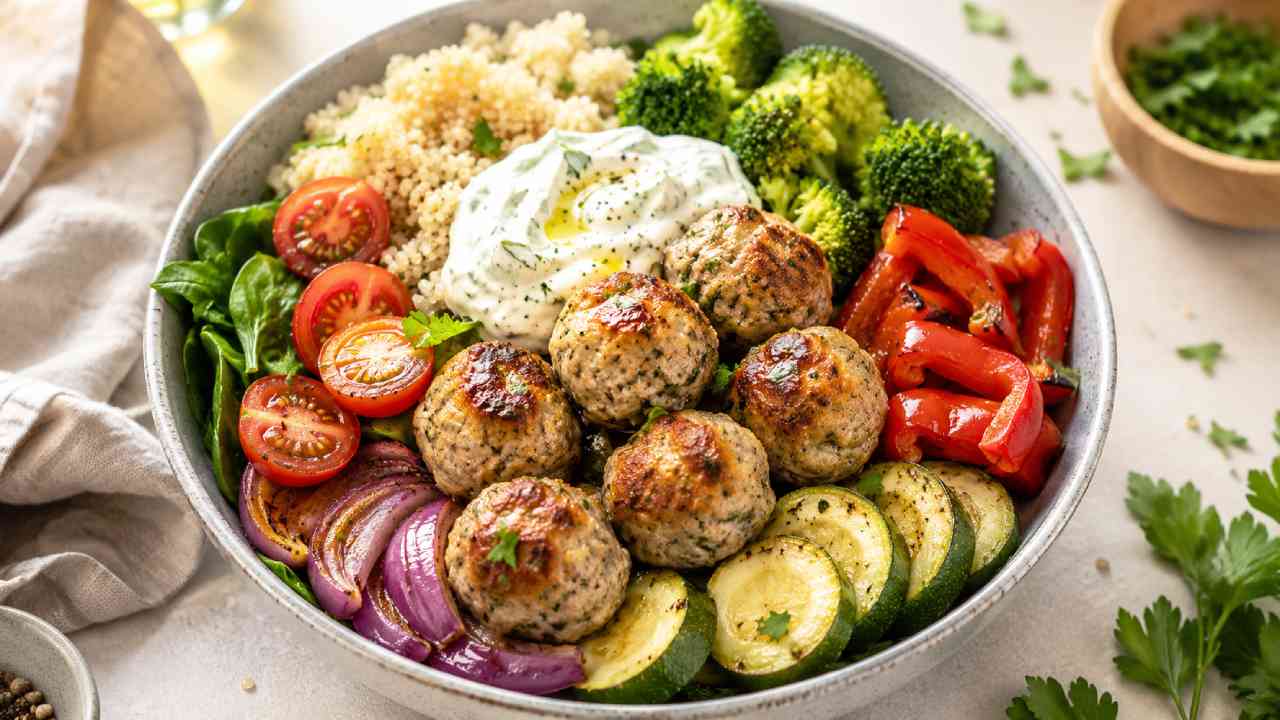
Turkey Meatball Bowl Combines Juicy Meatballs with Colorful Vegetables
LoveFoodReadyMeals – A Turkey Meatball Bowl combines juicy meatballs, colorful vegetables, and satisfying side ingredients in one practical meal. Instead of making healthy eating feel restrictive, this bowl focuses on variety and balance. Turkey provides protein, while vegetables add fiber, color, and different textures. Meanwhile, quinoa, brown rice, or sweet potato can provide carbohydrates when desired. A simple yogurt or tomato sauce brings everything together. Most importantly, each component can be adjusted to personal energy needs and preferences. Therefore, the dish works well for lunch, dinner, or weekly meal preparation. In my view, its strongest advantage is flexibility. You can build a lighter bowl with extra vegetables or create a more filling version after an active day. Either way, fresh ingredients and sensible portions matter more than complicated diet rules.
Read Also: Pistachio Kunafa Mochi Brings Chewy, Creamy, and Crunchy Together
Juicy Turkey Meatballs Become the Star of the Bowl
Turkey meatballs give this bowl its main savory character. Lean ground turkey works particularly well because it provides plenty of protein while allowing herbs and spices to stand out. However, very lean meat can become dry when cooked for too long. For that reason, adding finely chopped onion can help maintain moisture. Garlic, parsley, oregano, paprika, and black pepper also create deeper flavor without requiring a heavy sauce. Moreover, forming meatballs in similar sizes helps them cook evenly. Baking or air-frying them offers a convenient alternative to deep-frying. The goal is simple: create a lightly browned exterior while keeping the center tender and juicy. Once cooked correctly, the meatballs provide enough flavor to anchor the entire bowl.
Colorful Vegetables Add Freshness and Texture
Vegetables transform a simple meatball dish into a colorful meal. Broccoli, zucchini, bell peppers, carrots, and cherry tomatoes all work well. In addition, red onion can provide mild sweetness after roasting. Cooking the vegetables briefly helps preserve some texture while developing richer flavors. For example, roasting creates caramelized edges that contrast nicely with juicy meatballs. Fresh vegetables can also play a role. Cucumber, lettuce, spinach, and tomatoes bring a cooler element to the bowl. As a result, combining cooked and raw vegetables can make every bite feel different. Color also has a practical advantage because using several vegetables naturally introduces a wider range of nutrients. Still, variety does not need to become complicated. Three or four vegetables are often enough to create an appealing bowl.
Smart Carbohydrate Choices Make the Meal More Satisfying
A balanced diet does not automatically require removing carbohydrates. Instead, portions and overall dietary patterns deserve more attention. A Turkey Meatball Bowl can include quinoa, brown rice, couscous, potatoes, or sweet potatoes. Each choice creates a slightly different experience. Quinoa has a light, slightly nutty character. Brown rice offers a familiar and satisfying base. Meanwhile, roasted sweet potato adds natural sweetness that complements savory turkey. The serving size can also change according to individual needs. Someone preparing a substantial lunch may prefer a larger carbohydrate portion. In contrast, another person may choose extra vegetables and a smaller grain portion. Therefore, the bowl format makes portion adjustments straightforward. This flexibility is one reason it works well for different eating styles.
A Light Sauce Connects Every Ingredient
Even well-seasoned ingredients can feel disconnected without a good sauce. Fortunately, the sauce does not need to be complicated. Greek yogurt mixed with lemon, garlic, pepper, and fresh herbs creates a creamy yet refreshing option. Tzatziki also works beautifully for a Mediterranean-inspired bowl. Alternatively, a simple tomato sauce provides warmth and mild acidity. Tahini with lemon can add a nutty character. However, portion size still matters because sauces can contribute extra calories, sodium, or fat depending on their ingredients. Instead of covering the entire bowl, a moderate drizzle often provides enough flavor. Personally, I prefer yogurt-based sauce with turkey meatballs because its tangy freshness balances the warm meat and roasted vegetables. It also creates an appealing contrast between creamy and crisp textures.
Mediterranean Flavors Give the Bowl More Personality
A Mediterranean-inspired variation can make this dish especially flavorful. Start by seasoning the turkey with garlic, oregano, parsley, cumin, and black pepper. Then, pair the meatballs with cucumber, tomatoes, leafy greens, and red onion. Quinoa or couscous can form the base. After that, add a spoonful of tzatziki and a small amount of feta if desired. Lemon juice provides the final bright note. This combination works because it balances warm and cool ingredients. The meatballs provide savory depth, while fresh vegetables keep the bowl lively. Furthermore, herbs contribute aroma without requiring excessive salt. The finished meal feels colorful and substantial rather than resembling stereotypical “diet food.” That distinction can make healthier eating easier to maintain over time.
Turkey Meatball Bowl Works Well for Meal Prep
Busy schedules often make convenient food more tempting than balanced meals. Therefore, preparing several components ahead of time can help. Turkey meatballs work particularly well for meal prep because you can cook a batch at once. Roasted vegetables and grains can also be prepared in advance. However, keeping the components separate helps preserve their textures. Store the sauce in another container, especially when using leafy greens or cucumber. Then, assemble the bowl shortly before eating. Food safety also matters. Cook poultry thoroughly, cool leftovers promptly, and store them at safe refrigerator temperatures. Reheat cooked components properly before serving. With basic planning, one cooking session can provide several convenient meals without making every portion taste exactly the same.
Portion Balance Matters More Than Calling It Diet Food
No single dish automatically causes weight loss. Energy intake, activity, portion sizes, sleep, and long-term eating patterns all play a role. Therefore, labeling the Turkey Meatball Bowl as “diet food” can oversimplify its purpose. A better approach is to view it as a customizable balanced meal. Start with a generous portion of vegetables. Next, add turkey meatballs as the protein source. Then, choose an appropriate portion of grains or starchy vegetables. Finally, add sauce and toppings according to your needs. This structure makes the bowl easy to understand without relying on extreme restrictions. Moreover, it encourages variety. Someone can increase carbohydrates on active days or add more vegetables when they want a lighter meal.
Baca Juga: French Onion Bread Steals the Spotlight with Layers of Cheese and Flavor
Different Textures Keep Every Bite Interesting
Texture often determines whether a healthy meal feels satisfying. Fortunately, this bowl can offer several contrasts at once. Turkey meatballs should remain juicy inside with a lightly browned exterior. Roasted vegetables bring soft centers and caramelized edges. Fresh cucumber or lettuce adds crispness. Meanwhile, quinoa provides a delicate bite, while sweet potato offers a creamy texture. A yogurt sauce adds another smooth element. You can also sprinkle a few seeds or chopped herbs on top. These contrasts prevent the meal from becoming monotonous. In my experience, meals become more enjoyable when every ingredient contributes something different. Therefore, texture deserves as much attention as calories or macronutrients when creating a meal that people actually want to eat regularly.
Simple Ingredient Swaps Keep the Bowl Interesting
Eating the same meal repeatedly can eventually become boring. Fortunately, this bowl adapts easily without changing its basic structure. For example, replace quinoa with brown rice one week and roasted sweet potato the next. Switch broccoli for zucchini, green beans, or cauliflower. Likewise, change the sauce from yogurt and herbs to tomato or lemon tahini. Seasonings can also transform the meatballs. Italian herbs create one direction, while cumin and parsley produce a more Mediterranean character. These small changes help maintain variety while keeping meal preparation familiar. Moreover, seasonal vegetables can make the bowl more affordable and interesting throughout the year. Rather than searching for one “perfect” diet recipe, building a flexible meal template may offer greater value.
Turkey Meatball Bowl Brings Flavor and Balance Together
The appeal of a Turkey Meatball Bowl comes from its straightforward combination of flavor, nutrition, and convenience. Juicy turkey meatballs provide the savory centerpiece. Meanwhile, colorful vegetables add freshness, fiber, and visual appeal. A measured portion of grains or sweet potato can make the meal more satisfying. Finally, a light sauce connects every component. More importantly, the recipe remains flexible enough for different preferences. You can adjust portions, vegetables, seasonings, and sauces without losing the core idea. That flexibility makes the dish useful for everyday meals rather than short-term restrictive eating. Ultimately, balanced food should still taste enjoyable. This bowl demonstrates that simple ingredients, thoughtful seasoning, and varied textures can turn an ordinary healthy meal into something worth looking forward to.
