Peruvian Ceviche Brings Fresh Seafood Flavors to Healthy Dining
LoveFoodReadyMeals – Peruvian Ceviche offers a refreshing combination of fresh seafood, citrus juice, and traditional coastal flavors. This famous Peruvian dish stands out for its bright taste and simple ingredients. Unlike fried seafood, traditional ceviche uses raw fish mixed with lime juice, onions, and chili peppers. The citrus changes the fish’s texture while creating a distinctive flavor. Moreover, fresh herbs add an inviting aroma to every serving. Many people appreciate ceviche because it offers protein without requiring heavy sauces or deep-frying. However, safe seafood handling remains essential because citrus juice does not eliminate every food safety risk. Beyond its nutritional appeal, ceviche also reflects Peru’s rich culinary heritage. Its colorful presentation and refreshing taste make it an interesting choice for people exploring international cuisine. Each serving highlights the connection between traditional ingredients, coastal culture, and thoughtful food preparation.
Read Also: Baumkuchen German Tree Cake Reveals Beautiful Layers of Tradition
Peruvian Ceviche Reflects Peru’s Rich Coastal Food Heritage
Peruvian Ceviche holds an important place in the country’s culinary identity. Coastal communities have prepared seafood dishes for generations, using ingredients available near the Pacific Ocean. Over time, ceviche developed into one of Peru’s most recognizable foods. Its history reflects both local traditions and influences introduced through cultural exchange. Furthermore, the dish represents more than a refreshing seafood meal. In December 2023, UNESCO recognized the practices associated with preparing and consuming ceviche as intangible cultural heritage. This recognition highlights the dish’s social and cultural importance. Families, restaurants, and local communities continue to celebrate ceviche through different regional preparations. Although recipes vary, fresh seafood and bold seasonings remain central to its identity. Today, visitors often encounter ceviche while exploring Peruvian cuisine. Its lasting popularity shows how traditional food can connect people through shared flavors, memories, and cultural experiences.
Fresh Lime Juice Creates Ceviche’s Signature Citrus Flavor
The refreshing character of ceviche begins with lime juice. Its sharp acidity gives the dish a bright flavor that complements fresh seafood. When lime juice touches raw fish, it changes the structure of proteins near the surface. Consequently, the fish becomes firmer and develops a lighter appearance. However, this process does not cook seafood in the same way as heat. Lime juice cannot reliably destroy harmful bacteria or parasites. Therefore, careful ingredient selection and safe preparation remain necessary. Beyond its effect on texture, citrus also balances the natural richness of fish. Thinly sliced red onions provide crunch and a slightly sweet contrast. Meanwhile, chili peppers introduce heat without overwhelming the seafood. Fresh cilantro adds another layer of aroma. Together, these ingredients create a lively combination of flavors. The result feels refreshing, colorful, and closely connected to Peru’s coastal cooking traditions.
Traditional Ingredients Give Peruvian Ceviche Its Distinctive Character
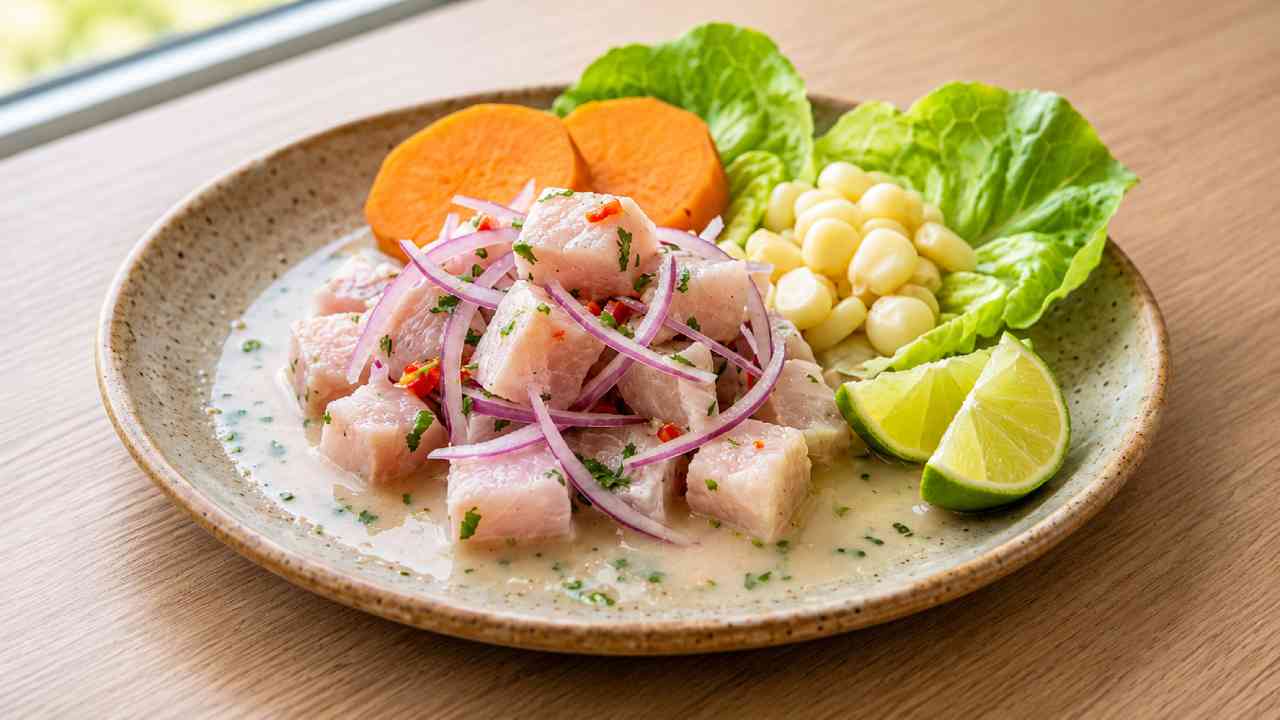
Traditional Peruvian Ceviche relies on a relatively short list of ingredients. Fresh fish, lime juice, red onions, chili peppers, and cilantro form its familiar foundation. Many preparations use ají limo, a chili valued for its fragrance and heat. Salt helps balance the overall flavor. Meanwhile, the choice of fish influences the dish’s texture and taste. Firm white fish is commonly preferred because it holds its shape when mixed with citrus. However, seafood quality and safe handling are more important than appearance alone. Traditional accompaniments also make ceviche distinctive. Boiled sweet potatoes add gentle sweetness, while large-kernel corn provides a satisfying contrast. Some servings include cancha, a toasted corn snack with a crunchy texture. These additions create a more complete dining experience. Rather than relying on complicated sauces, ceviche celebrates the natural character of its ingredients. Its simplicity allows each component to contribute something meaningful.
Leche de Tigre Adds Depth to Traditional Seafood Flavors
One of the most interesting elements of ceviche is leche de tigre. The Spanish name translates to tiger’s milk, although the liquid contains no tiger milk. Instead, it refers to the flavorful citrus-based mixture associated with ceviche preparation. Depending on the recipe, it may include lime juice, fish juices, chili, salt, and aromatic ingredients. Some cooks also add fish stock or other seasonings. As a result, leche de tigre develops a bold combination of acidity, heat, and savory flavor. It helps bring the ingredients together without requiring a heavy dressing. Furthermore, the liquid contributes to ceviche’s recognizable presentation. The fish often sits in a small amount of this seasoned mixture. Every bite can therefore carry both the seafood’s natural taste and the surrounding citrus flavors. Although preparation styles differ, leche de tigre remains an important part of Peru’s celebrated ceviche tradition.
Peruvian Ceviche Can Support a Balanced Eating Pattern
Peruvian Ceviche can fit into a balanced eating pattern when prepared safely and served in suitable portions. Fish provides protein, which supports normal muscle maintenance and other essential body functions. Many white fish varieties also contain relatively little saturated fat. Moreover, traditional ceviche does not require deep-frying. This preparation style may appeal to people seeking lighter seafood dishes. However, the nutritional value depends on the fish, ingredients, and serving size. Sweet potatoes and corn contribute carbohydrates, while herbs and onions add variety. Therefore, ceviche should not be viewed as a complete diet solution. It works best as part of meals that provide enough energy and different nutrients. People can also adjust the accompaniments to suit their preferences. A balanced approach focuses on overall eating habits rather than one particular dish. Ceviche offers an enjoyable example of combining protein-rich seafood with traditional plant-based ingredients.
Read Also: Japanese Hojicha Roll Cake Delivers the Rich Aroma of Roasted Tea
Colorful Side Dishes Create a More Satisfying Ceviche Experience
Peruvian Ceviche often arrives with colorful side dishes that complement its refreshing flavor. Sweet potatoes are among the most familiar additions. Their natural sweetness balances the sharp acidity of the lime juice. Meanwhile, Peruvian corn adds a mild flavor and a pleasantly firm texture. Toasted cancha introduces another contrast through its crunchy bite. These accompaniments also make the plate visually appealing. Bright onions, green herbs, golden corn, and orange sweet potatoes create a lively presentation. However, the side dishes serve a purpose beyond decoration. They contribute different textures and nutrients to the meal. For example, sweet potatoes provide carbohydrates and dietary fiber. Corn also contributes energy and some fiber. Together, these ingredients help create a more satisfying serving. The combination demonstrates how traditional food cultures often develop thoughtful flavor pairings. Each element supports the overall experience without hiding the seafood’s delicate character.
Safe Seafood Preparation Is Essential for Enjoying Ceviche
Food safety deserves special attention when preparing traditional ceviche. Because the fish is served without heat cooking, harmful microorganisms may remain present. Although lime juice changes the fish’s texture, it does not make raw seafood automatically safe. Therefore, selecting seafood from a reliable supplier is essential. Proper refrigeration and careful handling also help reduce unnecessary risks. Fish intended for raw consumption may require appropriate freezing to control certain parasites. However, freezing does not eliminate every harmful microorganism. Clean utensils and separate preparation surfaces can also reduce cross-contamination. Pregnant people, young children, older adults, and people with weakened immune systems should avoid raw fish. For these groups, fully cooked seafood offers a safer alternative. A cooked-fish ceviche variation can still feature lime, onions, and herbs. Although the texture differs, the refreshing flavor combination remains enjoyable. Responsible preparation allows food enthusiasts to appreciate ceviche while recognizing its limitations.
Peruvian Ceviche Inspires Fresh Approaches to Modern Dining
Peruvian Ceviche continues to attract interest beyond its traditional coastal setting. Its colorful appearance and bright flavors make it appealing to international food enthusiasts. Moreover, the dish demonstrates how a few carefully selected ingredients can create a memorable meal. Modern restaurants sometimes experiment with different seafood, citrus combinations, and presentation styles. However, traditional Peruvian ceviche remains closely associated with fresh fish, lime, onions, and chili. This recognizable foundation helps preserve its culinary identity. For people exploring healthier eating habits, ceviche also offers an opportunity to consider preparation methods. Choosing suitable portions and nutritious accompaniments can support a balanced meal. Nevertheless, raw seafood safety must remain a priority. Cooked variations provide another option for those who prefer to avoid raw fish. Ultimately, ceviche’s appeal extends beyond dietary trends. It celebrates coastal heritage, ingredient quality, and the vibrant flavors that make Peruvian cuisine distinctive.
