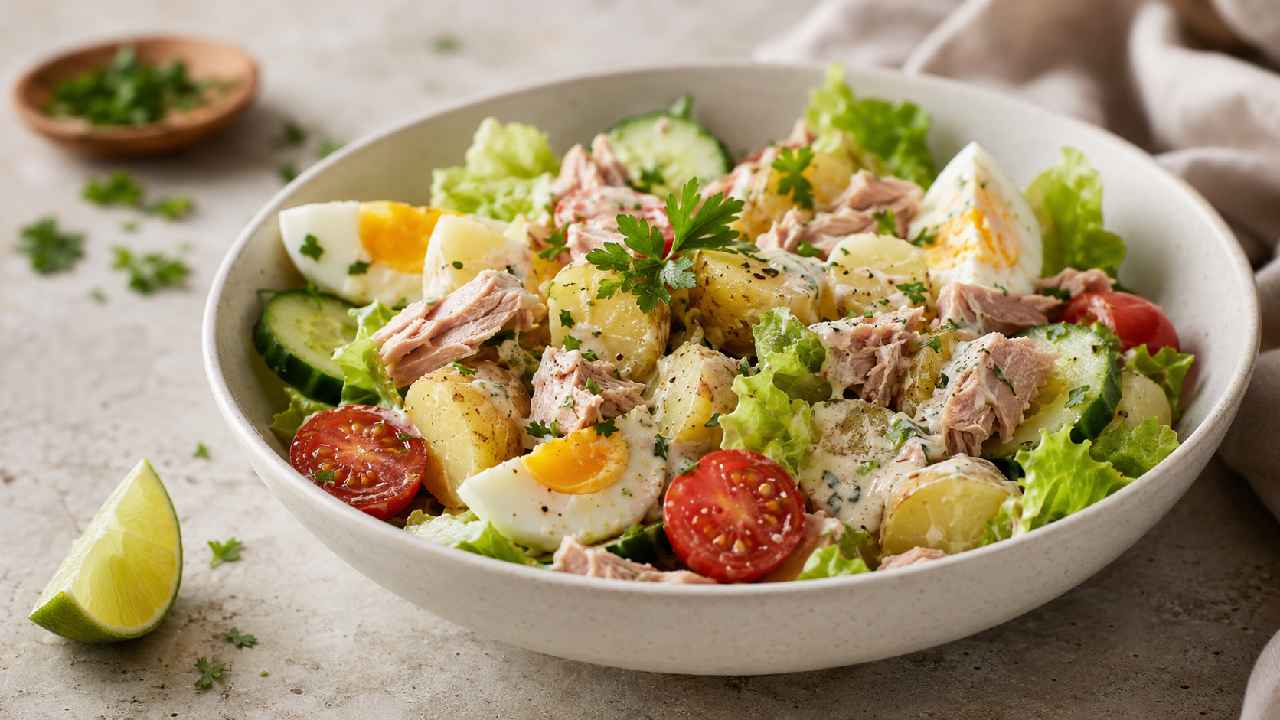
Tuna and Potato Salad: A Simple, Filling Meal for Your Diet
LoveFoodReadyMeals – Tuna and Potato Salad is a practical choice when you want a fresh meal that still feels satisfying. It combines tender potatoes, protein-rich tuna, crisp vegetables, and a light yogurt dressing. As a result, the dish offers more balance than a typical salad made only with leafy greens. It is also easy to prepare ahead of time, which makes it useful for busy weekdays. Instead of using a heavy mayonnaise dressing, this recipe relies on plain yogurt and lime juice. Therefore, the flavor remains creamy, bright, and refreshing without becoming overwhelming. The ingredients are widely available, and you can adjust each portion to match your dietary needs. In my view, that flexibility is the strongest feature of this meal. It does not feel like restrictive “diet food.” Instead, it delivers familiar flavors in a lighter and more thoughtful form.
Read Also: Honey Oat Cake BioBäckerei, An Organic Cake with an Irresistible Honey Aroma
Why Tuna and Potato Salad Works for a Balanced Diet
A successful diet meal should provide enough nourishment while helping you manage portions. This salad achieves that goal through a simple combination of carbohydrates, protein, fiber, and vegetables. Potatoes supply energy, while tuna and eggs add protein. Meanwhile, lettuce, cucumber, and tomatoes create freshness, texture, and volume. This mixture can help the meal feel substantial without requiring complicated ingredients. However, portion size still matters. Potatoes are nutritious, but adding too many can raise the total calorie content. Similarly, tuna packed in oil may contain more calories than tuna packed in water. For a lighter serving, use a moderate amount of potato and drain the tuna thoroughly. Overall, this meal works best as part of a varied eating pattern rather than a quick dietary solution. Sustainable progress usually comes from consistent habits, not one “perfect” recipe.
Ingredients for One Generous Serving
Prepare all the ingredients before assembling the salad. Choose fresh vegetables and plain yogurt without added sugar. You may also double the recipe for meal preparation.
- 150 grams of potatoes
- 80–100 grams of canned tuna in water, drained
- 1 large egg
- 2–3 lettuce leaves
- ½ medium cucumber
- 1 small tomato
- 2 tablespoons of plain unsweetened yogurt
- 1 teaspoon of fresh lime juice
- ¼ teaspoon of black pepper
- A small pinch of salt
- Fresh parsley or spring onion, optional
For the best texture, select waxy or all-purpose potatoes because they hold their shape after boiling. In addition, canned tuna in water keeps the dish lighter. If you only have tuna packed in oil, drain it well before use. Greek yogurt can create a thicker dressing, while regular plain yogurt produces a lighter consistency.
How to Make Tuna and Potato Salad
The preparation is simple, but the order of each step helps protect the salad’s texture. In particular, allow the potatoes to cool before adding the vegetables and dressing.
- Wash and cook the potatoes. Place the potatoes in a saucepan, cover them with water, and boil until fork-tender. Avoid overcooking them because they may break apart later.
- Boil the egg. Cook the egg for about 9–10 minutes. Transfer it to cold water, peel it, and cut it into quarters.
- Prepare the tuna. Open the can and drain all excess liquid. Gently separate the tuna with a fork.
- Chop the vegetables. Wash the lettuce, cucumber, and tomato. Dry them well, then cut them into bite-sized pieces.
- Make the dressing. Mix the yogurt, lime juice, black pepper, and a small pinch of salt in a bowl.
- Combine the ingredients. Add the cooled potatoes, tuna, and vegetables to a serving bowl. Pour the dressing over them.
- Toss and serve. Mix gently to keep the potatoes intact. Finally, add the egg and optional fresh herbs on top.
A Lighter Yogurt Dressing That Still Tastes Creamy
Traditional potato salad often uses a generous amount of mayonnaise. Although mayonnaise can fit into a balanced diet, it is energy-dense and easy to overuse. Plain yogurt offers a lighter alternative with a pleasant tang. Moreover, lime juice cuts through the richness of the tuna and makes the vegetables taste brighter. For extra flavor, add chopped parsley, dill, spring onion, garlic powder, or a small amount of mustard. These additions can make the dressing more interesting without relying on excess salt. Still, avoid sweetened or flavored yogurt because it may introduce an unwanted sugary taste. Greek yogurt works especially well if you prefer a thick and creamy finish. On the other hand, regular yogurt is suitable when you want the dressing to coat the ingredients more lightly. Taste the sauce before adding it to the salad, then adjust the seasoning gradually.
Nutrition and Estimated Calories per Serving
One serving of Tuna and Potato Salad may provide approximately 350–450 calories. However, the exact number depends on the size of the potato, the type of tuna, the yogurt, and any additional toppings. The tuna and egg contribute protein, which supports muscle maintenance and can help create a satisfying meal. Potatoes supply carbohydrates and potassium, while the vegetables provide fiber, water, and several micronutrients. Contrary to a common diet myth, potatoes do not automatically cause weight gain. Cooking method and portion size have a greater influence. Boiled potatoes are very different from deep-fried potatoes served with rich sauces. Furthermore, leaving some of the potato skin intact can add texture and fiber when the potatoes are washed properly. Nutritional needs vary, so consider this estimate a general guide rather than a fixed promise.
Practical Tips for Better Flavor and Texture
Small preparation details can turn a basic salad into a meal you genuinely want to eat. Follow these tips for a fresher and more satisfying result.
- Do not overcook the potatoes. Remove them from the water once they are tender but still firm enough to hold their shape.
- Cool the potatoes first. Warm potatoes may wilt the lettuce and make the yogurt dressing watery.
- Drain every ingredient well. Excess liquid from tuna, tomatoes, or washed vegetables can dilute the dressing.
- Season gradually. Canned tuna may already contain salt, so taste the salad before adding more.
- Add herbs for freshness. Parsley, dill, basil, or spring onion can lift the overall flavor.
- Keep the dressing separate for meal prep. Mix it into the salad shortly before eating to preserve the crisp texture.
- Use a clean, airtight container. Proper storage helps protect both quality and food safety.
Read Also: Eton Mess: The Classic British Dessert That Never Goes Out of Style
Easy Variations to Prevent Menu Boredom
Eating the same meal repeatedly can become tiring, even when the recipe is healthy. Fortunately, this salad is easy to customize. For more crunch, add sliced bell peppers, celery, radishes, or shredded carrots. If you enjoy a Mediterranean flavor, include olives, parsley, oregano, and a few cubes of feta cheese. Alternatively, add a small amount of avocado for extra creaminess and unsaturated fat. You can also replace the egg with chickpeas when you want a different texture. However, each additional ingredient changes the nutritional profile. Cheese, avocado, nuts, and extra dressing are nutritious, but their calories can accumulate quickly. Therefore, choose one or two additions instead of using every topping at once. A good variation should make the meal more enjoyable while keeping the portion aligned with your goals.
How to Serve It as a Complete Meal
This salad can work as lunch or a light dinner without requiring many side dishes. Serve it on a wide plate so the ingredients remain evenly distributed. If you need more vegetables, add steamed broccoli, green beans, or a bowl of clear vegetable soup. Meanwhile, people with higher energy needs may include a slice of whole-grain bread or increase the potato portion slightly. A glass of water, sparkling water, or unsweetened tea makes a suitable drink. Try to eat slowly and notice when you begin to feel comfortably satisfied. This habit is often more useful than labeling foods as strictly “good” or “bad.” In practice, a balanced meal should fit your routine, taste enjoyable, and provide enough energy for your activities. Tuna and Potato Salad meets those needs while remaining simple enough for regular home cooking.
Storage and Meal-Preparation Safety
Meal preparation can save time, but ingredients containing tuna, egg, and yogurt require careful refrigeration. Store the salad in a clean, sealed container and place it in the refrigerator promptly. For the best quality, keep the dressing separate and consume the prepared ingredients within one to two days. Do not leave the finished salad at room temperature for long periods, especially in warm weather. In addition, avoid freezing it because potatoes, lettuce, cucumber, and yogurt can develop an unpleasant texture after thawing. If the salad smells unusual, appears excessively watery, or has remained unrefrigerated for an uncertain period, it is safer to discard it. Good storage practices are an essential part of healthy eating. After all, nutritious ingredients only remain beneficial when they are handled and stored correctly.
