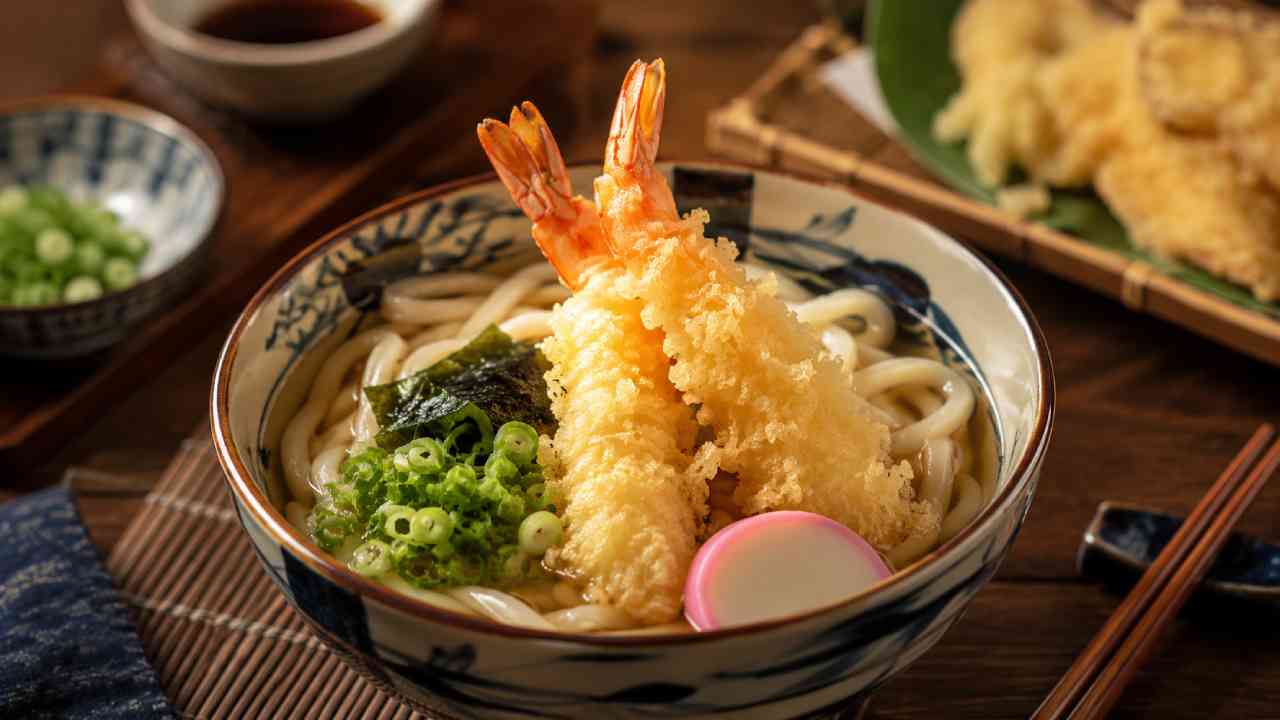
Asian Tempura Udon Combines Chewy Noodles With Golden Tempura
LoveFoodReadyMeals – Asian Tempura Udon brings together thick Japanese noodles, savory broth, and delicate pieces of golden tempura. Each element offers a different texture, yet they work naturally in one comforting bowl. The udon feels soft and pleasantly chewy, while freshly fried tempura adds a crisp contrast. Meanwhile, the warm broth carries gentle umami notes that connect both components. Shrimp is a popular tempura choice, although vegetables can provide plenty of variety. More importantly, the dish shows how simple ingredients can become memorable when texture receives as much attention as flavor. A bowl can feel satisfying without relying on an overly complicated preparation. For home cooks, that makes tempura udon an interesting introduction to Japanese comfort food. With careful timing and a few basic techniques, it is possible to create springy noodles, flavorful broth, and light tempura in the same meal.
Read Also: Healthy Pumpkin Soup Brings Creamy Comfort Without Heavy Cream
Why Asian Tempura Udon Feels So Comforting
The appeal of Asian Tempura Udon begins with contrast. Hot broth warms the noodles, while crispy tempura creates an entirely different sensation. At first, the coating remains light and crunchy. However, the edges gradually absorb some broth and become softer. This transition gives every bite a slightly different character. Udon itself also plays an important role. Unlike many thinner noodles, udon has enough thickness to provide a substantial chew. Therefore, it does not disappear beneath the toppings or broth. In my view, this balance makes the dish especially enjoyable. No single component needs to overpower the others. Instead, noodles provide body, broth supplies savory depth, and tempura delivers texture. Even simple garnishes such as sliced scallions can add freshness. Consequently, the finished bowl feels layered despite using relatively familiar ingredients.
Thick Udon Noodles Create the Signature Texture
Udon noodles are traditionally made primarily from wheat flour, water, and salt. Their simplicity makes texture especially important. Asian Tempura Udon works best when the noodles remain tender but still have a noticeable chew. Fresh or frozen udon can be particularly convenient because it cooks quickly. Dried udon also works, although cooking time varies between products. Therefore, checking the package instructions is useful. Overcooking should be avoided because excessively soft noodles lose much of their character once added to hot broth. After cooking, the noodles can be drained before being transferred into serving bowls. The broth is then poured over them while hot. Compared with ramen, udon usually feels thicker and more substantial. That difference helps it stand up well against tempura. The result is a noodle bowl where texture remains noticeable from the first bite to the last.
Dashi Gives the Broth Its Savory Foundation
A flavorful broth does not need to be extremely heavy. In fact, Asian Tempura Udon benefits from a relatively clear broth because it allows the noodles and tempura to remain distinct. Dashi commonly provides the savory foundation. Traditional Japanese dashi can be prepared with kombu and katsuobushi. However, convenient dashi products are also available for home cooking. Soy sauce and mirin can then add seasoning and gentle sweetness. The exact balance varies according to preference and recipe style. Therefore, tasting the broth before serving is important. If it becomes too salty, additional dashi or water can soften the intensity. Meanwhile, a little sliced scallion provides freshness against the warm savory base. The goal is not to create the strongest possible broth. Instead, it should support the other ingredients. A balanced broth makes every spoonful flavorful without overwhelming the delicate coating of the tempura.
Golden Tempura Brings the Essential Crunch
Tempura looks simple, but its texture depends heavily on technique. A good coating should feel light rather than thick or bread-like. Asian Tempura Udon commonly features shrimp tempura, although vegetables such as sweet potato, pumpkin, eggplant, mushrooms, and green beans also work well. Cold batter is especially useful because temperature contrast can help create a delicate crust during frying. Furthermore, the batter should not be mixed until completely smooth. A few small lumps are acceptable. Excessive mixing can develop gluten and produce a heavier coating. The ingredients should also be relatively dry before entering the batter because excess surface moisture can affect frying. Once coated, they are carefully placed into hot oil and cooked until crisp and lightly golden. Afterward, draining the tempura on a rack helps prevent excess oil from collecting around the crust.
Ingredients for Homemade Asian Tempura Udon
Making Asian Tempura Udon at home becomes easier when the components are prepared before cooking begins. The following ingredients make approximately two generous servings. Quantities can be adjusted depending on appetite and the number of toppings used.
● 2 portions fresh or frozen udon noodles
● 6 large shrimp, peeled and deveined
● 4 slices Japanese pumpkin or sweet potato
● 4 slices eggplant
● 2 shiitake mushrooms
● 750 ml prepared dashi
● 2 tablespoons soy sauce
● 2 tablespoons mirin
● 1 teaspoon sugar, optional
● 100 g all-purpose flour
● 1 cold egg
● 160 ml ice-cold water
● Extra flour for lightly dusting the shrimp and vegetables
● Neutral cooking oil for deep frying
● 2 scallions, thinly sliced
● Nori strips, optional
● Shichimi togarashi, optional
Preparing everything first is particularly helpful because tempura should ideally be served soon after frying.
How to Make Asian Tempura Udon Step by Step
The best results come from coordinating the broth, noodles, and tempura so everything reaches the table at the right time. Therefore, prepare the ingredients before heating the frying oil.
- Prepare the broth. Add dashi, soy sauce, mirin, and optional sugar to a saucepan. Warm gently and taste before adjusting the seasoning.
- Prepare the shrimp. Pat the shrimp dry. Make several shallow cuts along the underside if needed, then gently straighten them.
- Prepare the vegetables. Slice the vegetables into pieces that can cook quickly and evenly.
- Heat the frying oil. Bring neutral oil to approximately 170–180°C. Avoid overcrowding the pan because the oil temperature can drop quickly.
- Mix the batter. Lightly beat the cold egg with ice water. Add the flour and stir briefly. Do not worry about small lumps.
- Coat the ingredients. Dust shrimp and vegetables lightly with flour. Then, dip each piece into the cold batter.
- Fry until crisp. Carefully place the coated ingredients into the oil. Fry in small batches until the coating looks crisp and lightly golden.
- Drain the tempura. Transfer each piece to a wire rack and allow excess oil to drain.
- Cook the udon. Prepare the noodles according to package directions. Drain them once they reach the desired texture.
- Assemble the bowls. Divide the udon between bowls and pour over the hot broth. Add scallions and other garnishes.
- Add tempura last. Place the freshly fried tempura on top immediately before serving. Alternatively, serve it separately to preserve maximum crunch.
Keeping Tempura Crisp Takes Careful Timing
Timing can determine whether tempura stays delicate or becomes completely soaked. Once Asian Tempura Udon is assembled, the coating begins absorbing broth almost immediately. Some diners enjoy this softer texture because the crust captures savory liquid. Others prefer tempura that remains crisp until the final bite. Fortunately, both experiences are easy to achieve. For maximum crunch, serve the tempura on a separate plate and dip individual pieces into the broth while eating. Alternatively, place the tempura on top just before the bowl reaches the table. Another useful tip is to drain fried ingredients on a wire rack rather than piling them on paper towels. Air circulation helps the coating stay crisp. Additionally, avoid covering freshly fried tempura. Trapped steam can quickly soften the crust. Small details like these make a noticeable difference because texture is one of the defining qualities of this dish.
Read Also: Basque Burnt Chocolate Cake Takes the Burnt Cake Trend to a New Level
Shrimp and Vegetables Create Different Flavor Experiences
Shrimp may be the most recognizable tempura topping, but vegetables deserve equal attention. Sweet potato adds gentle sweetness, while eggplant becomes soft beneath its crisp coating. Mushrooms contribute deeper savory notes. Pumpkin, meanwhile, provides a creamy interior that contrasts beautifully with the batter. Therefore, Asian Tempura Udon can change considerably depending on the topping combination. A seafood-focused bowl may feature two or three shrimp. A vegetable version can combine pumpkin, mushrooms, eggplant, and green beans. Mixing both creates more variation from bite to bite. However, ingredients should be sliced according to their cooking time. Thick pieces of dense vegetables may remain undercooked before the coating becomes ready. Consistent sizing helps prevent this problem. This flexibility is one reason tempura udon works well for home cooking. The basic structure remains familiar, while toppings can change according to season and availability.
Simple Garnishes Can Brighten the Entire Bowl
Garnishes should support Asian Tempura Udon rather than hide its main flavors. Thinly sliced scallions are one of the easiest additions because they bring freshness and a mild sharpness. Nori strips can add another layer of savory flavor. Meanwhile, shichimi togarashi provides gentle heat and aromatic spice for diners who prefer a stronger finish. Kamaboko, a Japanese fish cake, is another traditional-looking addition that can add color and texture. However, filling the bowl with too many toppings can distract from the contrast between udon and tempura. Simplicity usually works better. A few scallions, a small amount of nori, and several pieces of tempura are often enough. Presentation also matters because the golden coating stands out beautifully against the clear broth and pale noodles. Consequently, even a homemade bowl can look inviting without complicated decoration.
Common Mistakes Can Make Tempura Heavy
Several small mistakes can change tempura from light and crisp to dense and oily. First, warm batter can produce different results from batter kept cold. Therefore, prepare it shortly before frying. Second, excessive stirring develops more gluten and can create a heavier coating. Mix only until the ingredients are loosely combined. Another common problem is frying too many pieces at once. Adding a large batch can reduce the oil temperature and slow cooking. As a result, the coating may absorb more oil. Asian Tempura Udon also suffers when fried toppings sit too long before serving. Ideally, cook the noodles and broth around the same time so assembly happens quickly. Finally, avoid making the batter excessively thick. Tempura should lightly coat the ingredient rather than completely bury it. These simple adjustments can dramatically improve the final texture.
Asian Tempura Udon Celebrates Contrast in Every Bite
Asian Tempura Udon demonstrates how contrasting textures can transform a straightforward noodle dish. Thick udon provides chewiness, dashi broth adds savory warmth, and golden tempura introduces a delicate crunch. More importantly, each component keeps its own identity while contributing to the complete bowl. That balance makes the dish comforting without feeling monotonous. Home cooks can also personalize it with shrimp, mushrooms, pumpkin, eggplant, or other suitable vegetables. Meanwhile, serving the tempura separately offers an easy way to control how much broth reaches the coating. In my experience, that small choice makes the meal especially enjoyable because every diner can decide between crispy and broth-soaked bites. Ultimately, the appeal does not come from complexity. It comes from careful preparation, thoughtful timing, and ingredients that complement one another. For anyone exploring Japanese comfort food, tempura udon offers an approachable and satisfying place to begin.
