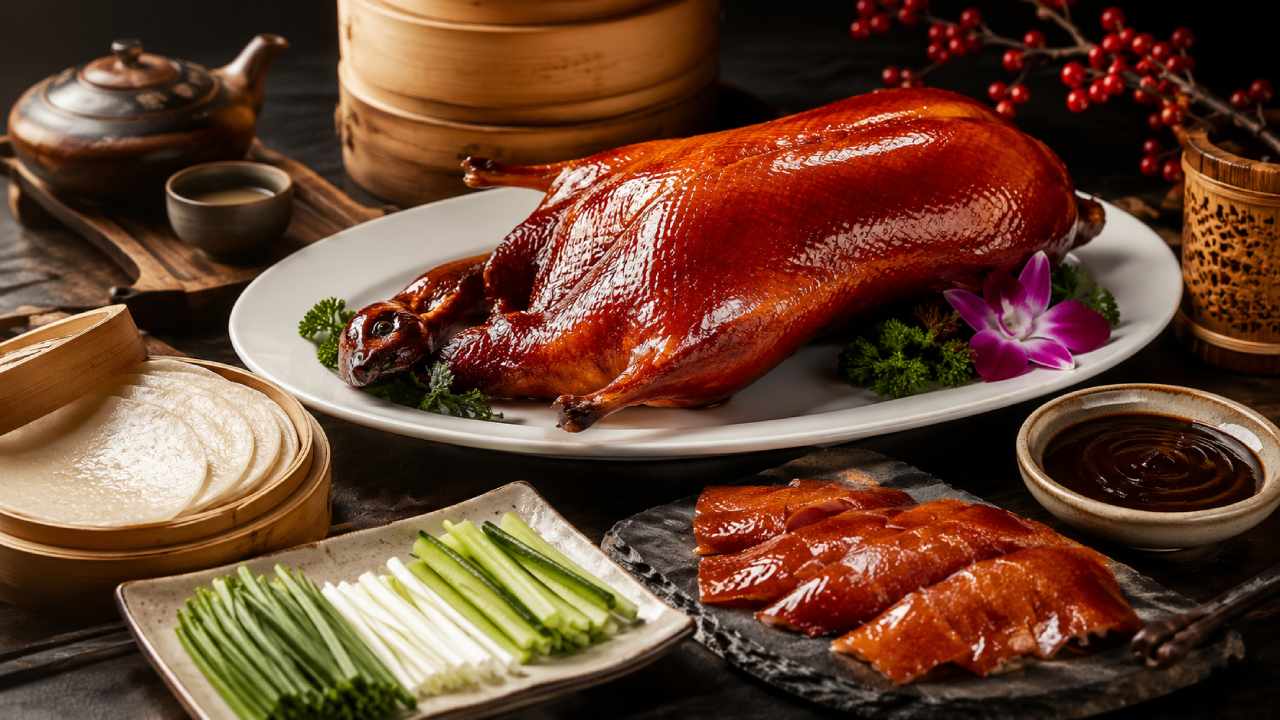
Peking Duck, a Legendary Chinese Dish with Crispy Skin and a World-Famous Flavor
LoveFoodReadyMeals – Peking Duck has become one of the most recognized dishes in Asian cuisine, and its reputation extends far beyond China. At first glance, many people see it as simply roasted duck. However, the experience becomes very different once the dish reaches the table. The crispy golden skin, tender meat, and rich aroma create a combination that instantly captures attention. Over time, Peking Duck has transformed from a traditional royal meal into a culinary icon enjoyed across the world. Moreover, food lovers often describe their first encounter with Peking Duck as memorable because the presentation itself feels special. While many dishes become popular for a short period, this legendary meal has remained relevant for centuries.
Peking Duck Began As A Royal Dish In Ancient China
The story behind Peking Duck started many centuries ago in China. Historically, the dish was connected to imperial kitchens and special occasions. During ancient dynasties, chefs prepared this meal specifically for members of the royal family and honored guests. Therefore, Peking Duck was not considered an ordinary food choice. Instead, it represented status and culinary excellence. In addition, traditional cooking methods required patience and skill. As a result, only experienced chefs could prepare the dish correctly. Even today, many people continue to associate Peking Duck with elegance and celebration. The historical value behind the meal gives it an identity that goes beyond taste alone.
The Crispy Skin Creates The Signature Experience
One of the biggest reasons people remember Peking Duck is its famous crispy skin. Unlike many roasted duck dishes, the skin receives special attention during preparation. Chefs use techniques that allow the skin to become thin, golden, and extremely crisp. Consequently, the first bite creates a texture that feels both delicate and satisfying. Many food lovers believe the skin is actually the highlight of the meal. Furthermore, some traditional restaurants even serve the skin separately because of its unique quality. This detail demonstrates how important texture has become in the overall dining experience. Great food often balances flavor and texture together, and Peking Duck succeeds in both areas.
Read Also: Aish el Saraya, Egypt’s Iconic Dessert of Syrup, Cream, and Tradition
The Preparation Process Requires Time And Precision
Creating authentic Peking Duck is not a quick process. Instead, chefs often spend several hours or even longer preparing the dish correctly. First, the duck is cleaned and seasoned carefully. Next, air is usually pumped between the skin and meat to create separation. This technique helps the skin become crisp during roasting. Afterward, the duck is dried before entering the oven. Consequently, every stage contributes to the final texture and appearance. While modern methods may simplify certain steps, traditional preparation still remains highly respected. The amount of detail involved explains why many people see Peking Duck as both food and culinary craftsmanship.
The Flavor Comes From Balance Rather Than Intensity
Many famous dishes rely on strong spices and bold flavors. However, Peking Duck follows a different approach. Instead of overwhelming the palate, the dish creates harmony between several elements. The meat offers rich and savory flavors, while the skin adds a satisfying crisp texture. At the same time, sauces and side ingredients introduce sweetness and freshness. Consequently, every bite feels balanced rather than heavy. This may explain why people from different cultures can easily enjoy the dish. Food trends often change quickly, yet balanced flavors usually remain timeless. Therefore, Peking Duck continues to attract new generations of food lovers.
Traditional Serving Methods Make The Meal Special
The presentation of Peking Duck often becomes part of the experience itself. Many restaurants slice the duck in front of guests before serving it. Afterward, diners wrap the meat and crispy skin in thin pancakes along with sauces and vegetables. Fresh cucumber and spring onions commonly accompany the dish because they add contrast and freshness. Consequently, the process feels interactive rather than ordinary. People enjoy creating their own combinations according to personal preferences. This serving style also makes the meal feel more memorable because diners participate directly in the experience.
Peking Duck Expanded Beyond China
Although Peking Duck originated in China, its popularity eventually spread across many countries. Today, people can find the dish in major cities around the world. In fact, restaurants often adapt the recipe to local preferences while keeping the original identity intact. Some versions introduce creative sauces or modern presentation styles. However, the essential characteristics usually remain unchanged. The crispy skin and tender meat continue to define the dish. Because of globalization and food culture exchanges, traditional dishes now travel faster than ever. As a result, Peking Duck successfully moved from a regional specialty into a global culinary symbol.
Food Lovers Continue Returning To Timeless Classics
Modern food trends frequently appear and disappear within short periods. One month people talk about a new dessert, while another month introduces a completely different trend. Nevertheless, classic dishes often survive because they create emotional and sensory experiences. Peking Duck represents this idea perfectly. While newer dishes may generate temporary excitement, timeless recipes build lasting connections with people. Furthermore, food lovers often return to meals that provide familiarity and quality. Looking at its long history, has already proven its ability to survive changing culinary trends. Rather than becoming outdated, it continues finding new audiences around the world.
