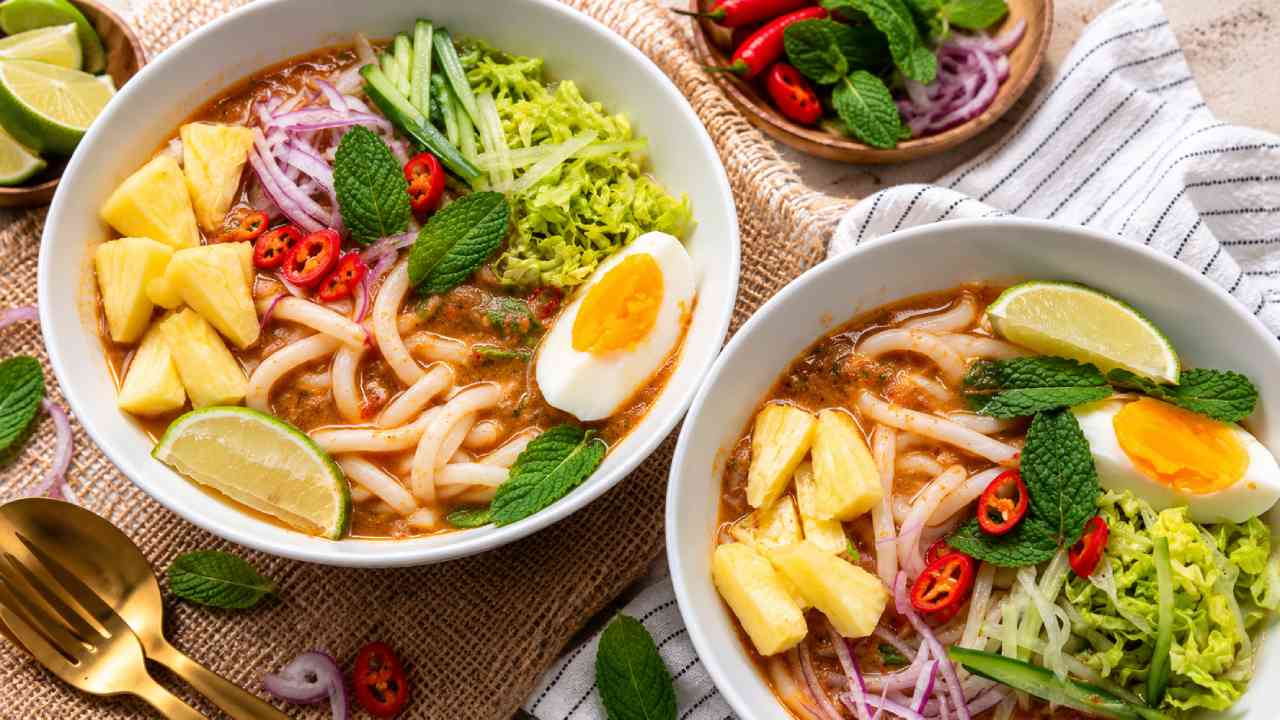
Asian Assam Laksa, Spicy Sour Noodles with Rich Fish Broth
LoveFoodReadyMeals – Assam Laksa brings together thick noodles, rich fish broth, fresh herbs, and a bold sour-spicy flavor. This famous Malaysian dish offers a very different experience from creamy coconut-based laksa. Instead, its broth tastes bright, tangy, savory, and deeply aromatic. Fish gives the soup its rich body, while tamarind adds a refreshing sour note. Meanwhile, chili brings gentle heat that makes every spoonful more exciting. Fresh cucumber, pineapple, onion, and herbs then add contrast. As a result, one bowl delivers several flavors and textures at once.
Read Also: Avocado Bread Healthy Food Recipe for a Soft and Nutritious Breakfast
Assam Laksa Represents Bold Asian Flavors
Many Asian noodle dishes rely on rich stock, spices, or creamy coconut milk. However, Assam Laksa follows a different path. Its identity comes from the balance between sour broth and savory fish. This combination creates a flavor that feels strong yet refreshing. In Malaysia, the dish is closely associated with Penang and its vibrant food culture. Moreover, the toppings play an important role. Fresh vegetables and herbs cut through the rich fish flavor. Therefore, each bite can taste slightly different. In my view, this contrast makes Assam Laksa memorable. It does not depend on one dominant ingredient. Instead, several elements work together to build a complex bowl.
Fish Broth Creates the Heart of Assam Laksa
The broth is the most important part of this recipe. Traditionally, oily fish such as mackerel can provide a rich savory base. The fish is first cooked until tender. Then, the flesh is separated and returned to the broth. This method gives the soup more body without using coconut milk. Next, tamarind creates the signature sour flavor. Chili, lemongrass, onion, and other aromatic ingredients build another layer of flavor. However, balance remains important. Too much tamarind can overpower the fish. On the other hand, too little acidity can make the broth taste flat. Therefore, tasting the broth during cooking is essential.
Thick Noodles Make Every Bite More Satisfying
Assam Laksa is commonly served with thick rice noodles. Their chewy texture works well with the bold broth. Unlike very thin noodles, thick noodles remain noticeable even when surrounded by intense flavors. In addition, their smooth surface makes each bite feel light despite the rich soup. If traditional laksa noodles are unavailable, thick rice noodles can work as an alternative. However, avoid overcooking them. Soft and broken noodles can change the overall texture of the dish. Instead, cook them until tender but still pleasantly chewy. After draining, divide the noodles directly into serving bowls. The hot broth can then be poured over them before adding the toppings.
Ingredients for Asian Assam Laksa
This recipe makes about four generous servings.
For the fish broth:
● 600 grams mackerel or another flavorful fish
● 1.5 liters water
● 2 stalks lemongrass, lightly crushed
● 3 tablespoons tamarind paste
● 2 tablespoons chili paste
● 6 shallots
● 3 cloves garlic
● 2 red chilies
● 1 small piece fresh ginger
● 1 teaspoon shrimp paste, optional
● 1 tablespoon sugar
● 1 teaspoon salt, or to taste
For the noodles and toppings:
● 500 grams thick rice noodles
● 1/2 cucumber, thinly sliced
● 150 grams fresh pineapple, thinly sliced
● 1 red onion, thinly sliced
● Fresh mint leaves as needed
● Fresh red chili as needed
● Lettuce or fresh herbs as desired
● Lime wedges for serving
● Sweet shrimp paste sauce, optional
How to Prepare the Fish
1. Clean the fish carefully and place it in a large pot.
2. Add the water and crushed lemongrass. Then, bring everything to a gentle boil.
3. Cook the fish until the flesh becomes tender and separates easily from the bones.
4. Remove the fish from the pot. However, keep the cooking liquid because it will become the broth.
5. Allow the fish to cool slightly before removing the bones and skin.
6. Flake the fish into small pieces using your fingers or a fork.
7. Check the fish carefully for small bones before returning it to the broth.
8. Set the prepared fish aside while making the spice mixture.
How to Make the Spicy Sour Broth
1. Blend the shallots, garlic, red chilies, and ginger until they form a smooth paste.
2. Heat a small amount of oil in a pot over medium heat.
3. Add the blended mixture. Then, cook it until fragrant.
4. Add the chili paste and shrimp paste if you are using it.
5. Pour in the reserved fish cooking liquid and stir well.
6. Add the tamarind paste, sugar, and salt.
7. Return the flaked fish to the broth. Next, reduce the heat.
8. Simmer gently for about 20 to 30 minutes so the flavors can develop.
9. Taste the broth. Add more tamarind for acidity or sugar for balance if needed.
How to Assemble Assam Laksa
1. Cook the thick rice noodles according to the package instructions.
2. Drain the noodles well and divide them among four serving bowls.
3. Pour the hot fish broth over each portion of noodles.
4. Make sure every bowl receives enough fish from the broth.
5. Add sliced cucumber, pineapple, and red onion on top.
6. Add fresh mint leaves and sliced chili for extra aroma and color.
7. Add a small amount of sweet shrimp paste sauce if desired.
8. Serve immediately while the broth remains hot.
Tips for Making Better Assam Laksa
1. Choose flavorful fish because it forms the foundation of the broth.
2. Remove every fish bone carefully before returning the flesh to the soup.
3. Add tamarind gradually because its acidity can become strong very quickly.
4. Keep the broth at a gentle simmer after adding the fish.
5. Do not overcook the rice noodles because they can become too soft.
6. Prepare the fresh toppings shortly before serving to keep them crisp.
7. Use ripe but firm pineapple for a pleasant sweet and sour contrast.
8. Taste the broth several times during cooking and adjust the seasoning gradually.
9. Serve the noodles immediately after adding the broth for the best texture.
Tamarind Gives Assam Laksa Its Signature Character
Tamarind plays an essential role in Assam Laksa. Its acidity gives the broth a sharp and refreshing character. However, tamarind does more than make the soup sour. It also balances the richness of the fish. As a result, the broth can taste full-bodied without becoming too heavy. Sugar is often added in a small amount to soften the acidity. Meanwhile, salt strengthens the savory elements. The goal is not to make one flavor dominate. Instead, sour, spicy, sweet, and savory notes should appear in layers. This balance is one reason the dish tastes complex despite using relatively simple ingredients.
Fresh Toppings Bring Texture and Balance
The toppings should not be treated as simple decoration. In fact, they play an important role in the overall experience. Cucumber brings crunch and freshness. Pineapple provides natural sweetness and additional acidity. Meanwhile, sliced onion adds a sharp bite. Fresh mint gives the bowl a clean aroma. Together, these ingredients create contrast against the warm fish broth. Moreover, the different colors make the dish more visually appealing. A good bowl of Assam Laksa should look lively rather than uniform. Therefore, adding the toppings just before serving helps preserve their color, aroma, and texture.
Read Also: Viral Chocolate Babka Recipe, Beautiful Layers Packed With Rich Chocolate
Assam Laksa and Curry Laksa Are Very Different
Although both dishes carry the name laksa, they offer very different experiences. Curry laksa usually features a rich broth made with coconut milk and spices. Therefore, it tends to taste creamy, savory, and slightly sweet. Assam Laksa, on the other hand, relies on fish and tamarind. Its broth feels lighter but has a sharper flavor. The sour element also makes the dish particularly refreshing. In addition, Assam Laksa often uses more fresh toppings. This creates stronger contrasts between hot and cool ingredients. Neither style needs to be considered better. Instead, they represent two distinctive approaches to the diverse world of Southeast Asian noodle dishes.
Adjust the Heat Without Losing the Original Flavor
Not everyone enjoys the same level of heat. Fortunately, this recipe can be adjusted without losing its main character. For a milder bowl, reduce the amount of chili paste and fresh chili. However, keep enough chili to provide a gentle background warmth. If you prefer stronger heat, add extra red chili to the spice paste. You can also serve sliced chili separately. This method allows everyone to adjust their own bowl. Nevertheless, avoid using too much chili. Assam Laksa should still showcase its sour fish broth. The heat should support the tamarind and fish rather than cover their flavors.
A Bowl Filled with Southeast Asian Character
Assam Laksa shows how contrasting ingredients can create a balanced dish. The fish broth provides depth, while tamarind brings refreshing acidity. Chili adds warmth, and thick noodles make the meal satisfying. At the same time, pineapple, cucumber, onion, and herbs keep each bite fresh. This combination creates a bowl that feels comforting and lively at once. More importantly, the dish offers a glimpse into Malaysia’s diverse culinary traditions. For anyone exploring Asian cuisine at home, Assam Laksa provides something different from common fried rice or creamy noodle dishes. Its bold aroma and sour-spicy broth make it a memorable recipe worth discovering.
