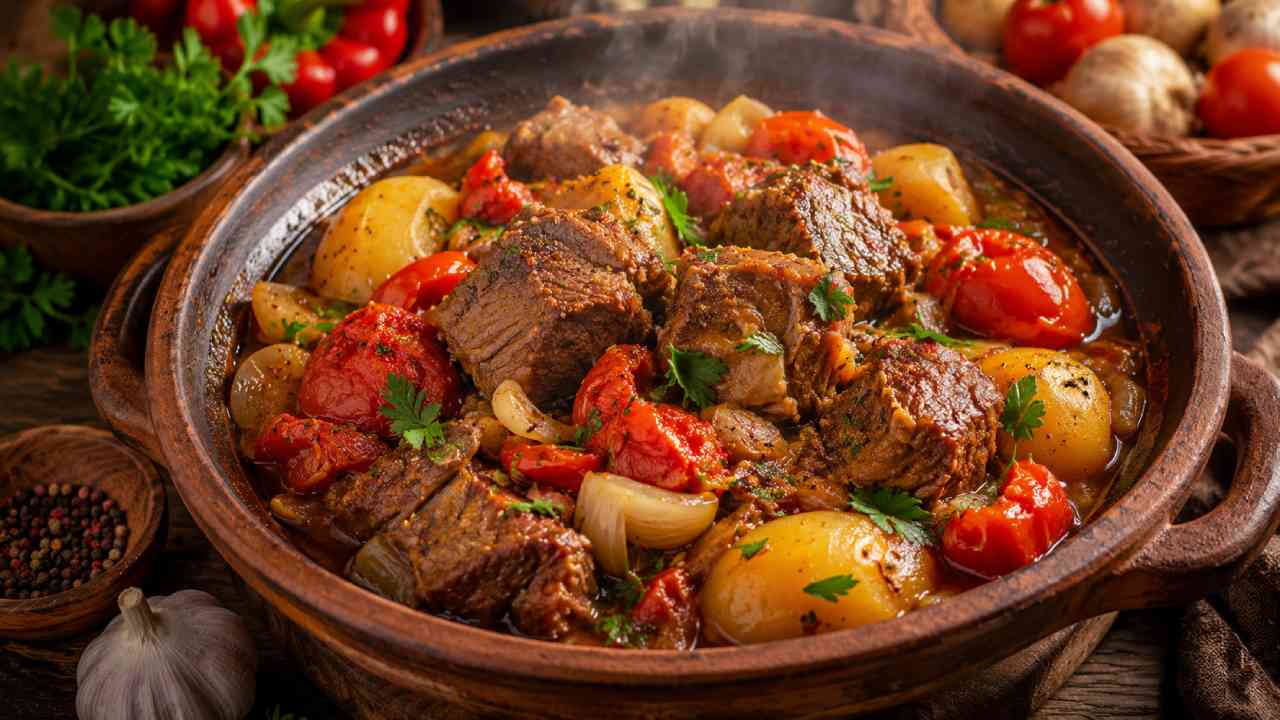
Khashlama Meals Bring Tender Meat and Slow-Cooked Vegetables Together
LoveFoodReadyMeals – Khashlama brings tender meat, colorful vegetables, fresh herbs, and flavorful cooking juices together in a comforting meal. The dish is strongly associated with Armenia, although versions of Khashlama also appear across the Caucasus. At its heart, the cooking method is surprisingly straightforward. Meat and vegetables cook slowly until their natural flavors blend inside the pot. Meanwhile, tomatoes, onions, and peppers release moisture, helping create a savory broth around the meat. Unlike heavily spiced stews, Khashlama often allows its main ingredients to remain recognizable. Therefore, ingredient quality and patient cooking matter more than complicated preparation. The finished meal feels rustic, generous, and especially suitable for sharing. Moreover, each spoonful can offer something different, from tender meat to sweet onions and soft vegetables. This balance makes Khashlama an interesting example of how slow cooking can turn familiar ingredients into a deeply satisfying meal.
Read Also: Musakhan Recipes Turn Chicken, Sumac, and Onions Into a Flavorful Feast
Khashlama Builds Rich Flavor Through Slow and Patient Cooking
The character of Khashlama develops gradually rather than through aggressive frying or a heavy sauce. Large pieces of meat cook alongside vegetables over relatively gentle heat. As the temperature rises, tomatoes and onions release moisture. The meat also contributes flavorful juices and fat. Consequently, a broth begins forming naturally inside the pot. This method allows different ingredients to influence one another throughout cooking. However, patience is essential. Tougher cuts of beef or lamb need enough time for their connective tissue to soften. If the dish cooks too quickly, the meat may remain firm while the vegetables lose their ideal texture. A gentle simmer provides better control. In my view, this is what makes Khashlama particularly appealing for home cooking. The recipe does not require constant intervention. Instead, careful preparation at the beginning allows time and heat to handle much of the work.
Tender Meat Forms the Heart of a Traditional Khashlama
Meat is usually the centerpiece of Khashlama. Beef and lamb are common choices, although recipes vary between families and regions. Cuts suited to slow cooking work particularly well because they become more tender over time. Bone-in pieces can also contribute additional richness to the cooking liquid. However, bigger pieces are generally preferable to very small cubes. They hold their shape better during the long cooking process. Furthermore, the meat should not be buried beneath excessive seasoning. Salt, pepper, and a few aromatic ingredients can support its natural flavor without overwhelming it. This approach differs from dishes that rely on thick marinades or complex spice blends. Khashlama instead builds character through the interaction between meat, vegetables, herbs, and time. When cooked correctly, the meat should become tender enough to separate easily with a fork. Yet it should still retain enough structure to remain satisfying.
Vegetables Create Color, Sweetness, and Natural Cooking Juices
Vegetables are more than supporting ingredients in Khashlama. Tomatoes, onions, and bell peppers can provide much of the moisture needed during cooking. Tomatoes bring gentle acidity, while onions become sweeter as they soften. Bell peppers add another layer of sweetness and aroma. Depending on the recipe, potatoes may also appear in the pot. They absorb the surrounding broth while adding substance to the meal. As a result, Khashlama can feel complete without requiring several side dishes. The vegetables also give the finished pot a striking appearance. Red tomatoes, green herbs, golden potatoes, and colorful peppers surround large pieces of tender meat. Therefore, the dish looks naturally inviting without complicated presentation. Still, timing matters. Very soft vegetables can break down during extended cooking. For better texture, cooks can cut them into substantial pieces rather than small cubes. This helps each ingredient remain recognizable when served.
Layering the Ingredients Helps Every Flavor Develop Together
Some Khashlama preparations use a layered approach. Instead of mixing every ingredient continuously, cooks arrange meat and vegetables in sections inside a deep pot. For example, onions may create an aromatic base before meat, peppers, tomatoes, and herbs are added. The exact order varies between recipes. However, the principle remains useful. Layering keeps ingredients close together while they release moisture and flavor. Once the pot begins simmering, steam circulates through those layers. Meanwhile, vegetable juices move downward and combine with the meat. There is usually little reason to stir aggressively. In fact, excessive stirring can break soft vegetables into the broth. Leaving the ingredients relatively undisturbed helps preserve their rustic appearance. This method also makes Khashlama visually distinctive when the pot reaches the table. Instead of looking like a completely blended stew, diners can still identify the meat, potatoes, peppers, tomatoes, and herbs that created the meal.
Khashlama Ingredients for a Comforting Family Meal
A homemade Khashlama can be prepared with accessible ingredients. However, regional and family variations are common, so this recipe should be viewed as one practical home-style interpretation rather than the only traditional formula. Choose meat suited to slow cooking and use ripe vegetables whenever possible.
● 1 kg beef chuck or lamb shoulder, cut into large pieces
● 3 large onions, thickly sliced
● 4 ripe tomatoes, cut into wedges
● 2 red bell peppers, roughly chopped
● 2 green bell peppers, roughly chopped
● 4 medium potatoes, halved or quartered
● 4 garlic cloves, lightly crushed
● 750 ml water or unsalted meat stock
● 1 teaspoon salt, plus more to taste
● ½ teaspoon freshly ground black pepper
● 1 teaspoon paprika, optional
● 1 bunch fresh parsley, roughly chopped
● 1 small bunch fresh cilantro, roughly chopped
● 2 bay leaves
These quantities produce a generous family-style meal. Meanwhile, the amount of liquid can be adjusted because tomatoes and other vegetables will release additional moisture while cooking.
How to Make Khashlama Step by Step
Khashlama requires more time than technical skill. Therefore, the most important goal is maintaining gentle heat while allowing the meat to become tender. A heavy pot with a secure lid works especially well.
- Pat the meat dry and cut it into large, evenly sized pieces.
- Season the meat lightly with salt and black pepper.
- Arrange a layer of sliced onions across the bottom of a large pot.
- Place half of the meat over the onions.
- Add some tomatoes, bell peppers, garlic, and fresh herbs.
- Repeat the layers with the remaining meat and vegetables.
- Add the potatoes near the upper section so they retain more structure.
- Add bay leaves and paprika if you are using them.
- Pour in enough water or stock to create cooking liquid without completely covering everything.
- Bring the liquid gently toward a simmer.
- Reduce the heat, cover the pot, and cook slowly for about 1½ to 2½ hours. Timing will depend on the meat.
- Check occasionally and add a little hot water if the pot becomes too dry.
- Remove the bay leaves once the meat becomes fork-tender.
- Taste the broth and adjust the seasoning before serving.
- Finish with additional fresh parsley or cilantro for a brighter aroma.
Simple Tips Help Preserve the Best Texture and Flavor
Although Khashlama is forgiving, several small decisions can noticeably improve the final result. First, avoid cutting the meat and vegetables too small. Larger pieces tolerate long cooking better and create a more rustic presentation. Second, maintain a gentle simmer rather than a vigorous boil. Excessive heat can make meat tougher at first and cause vegetables to collapse too quickly. Moreover, do not automatically add large amounts of liquid. Tomatoes, onions, and peppers release water as they cook. Starting with less liquid gives you more control over the broth. Finally, taste near the end rather than adding too much salt at the beginning. As moisture reduces, flavors naturally become more concentrated.
- Choose beef chuck or lamb shoulder for reliable slow-cooked tenderness.
- Cut vegetables into large pieces so they keep their shape.
- Keep the heat low once the pot begins simmering.
- Avoid unnecessary stirring during the cooking process.
- Add only enough liquid to support gentle cooking.
- Use ripe tomatoes because they contribute both moisture and flavor.
- Add fresh herbs near serving time for a brighter aroma.
- Let the dish rest briefly before serving so the flavors settle.
Fresh Herbs Bring Balance to the Rich Meat and Broth
Fresh herbs provide an important contrast to the deeper flavors inside the pot. Parsley and cilantro are useful choices because they add freshness without requiring a complicated sauce. Some can cook with the meat and vegetables, while another handful can be added just before serving. This final addition creates a brighter aroma and fresher appearance. Furthermore, herbs help balance the richness of lamb or beef. They prevent each spoonful from feeling excessively heavy. Garlic plays a similar supporting role, although it changes significantly during slow cooking. Instead of remaining sharp, garlic becomes mellow and blends into the broth. Together, these aromatic ingredients demonstrate an important principle behind Khashlama. Flavor does not always need to come from a long list of dried spices. Fresh produce, herbs, meat, and patient cooking can create plenty of complexity. That restrained approach gives the meal a clean but satisfying character.
Read Also: Mochi Basque Cake Goes Viral With a Creamy Center and Chewy Texture
Serving Khashlama Straight From the Pot Keeps Its Rustic Character
Khashlama does not need elaborate plating. In fact, a large serving bowl or deep platter often suits its character better. Start by arranging several pieces of tender meat in the center. Then, surround them with potatoes, tomatoes, onions, and peppers. Spoon some hot broth over everything before adding fresh herbs. Bread makes a natural accompaniment because it can absorb the flavorful cooking liquid. However, the dish is substantial enough to stand on its own. Potatoes provide carbohydrates, while the meat makes it filling. A simple fresh salad can add contrast if desired. More importantly, serve Khashlama while it is still warm. The aroma becomes particularly inviting when the hot broth meets freshly chopped herbs. Family-style presentation also fits the nature of the dish. A large pot placed near the center of the table immediately creates a relaxed, communal atmosphere rather than the feeling of a carefully constructed restaurant plate.
Regional Variations Make Khashlama More Interesting to Explore
One reason Khashlama deserves careful description is its regional diversity. The name appears in culinary traditions across the Caucasus, while individual preparations can differ considerably. Some recipes emphasize lamb, whereas others use beef. Vegetable combinations also change. Likewise, cooks may disagree about how much liquid should enter the pot or which herbs belong in the final dish. For that reason, presenting one recipe as the single authentic version would oversimplify a much broader cooking tradition. A better approach is to appreciate how families adapt the basic idea. Meat, vegetables, gentle heat, and time remain central to many interpretations. Yet small choices can create noticeably different results. This variation is part of what makes traditional food fascinating. Recipes rarely exist in isolation. Instead, they travel through generations, households, and neighboring regions. Khashlama reflects that reality particularly well, giving curious cooks several versions to discover.
Khashlama Shows Why Simple Meals Can Still Feel Special
The lasting appeal of Khashlama comes from transformation rather than complexity. At the beginning, the pot contains familiar ingredients that still feel separate. There are pieces of meat, fresh tomatoes, onions, peppers, potatoes, garlic, and herbs. After slow cooking, however, those ingredients become connected through their own juices. The meat turns tender. Tomatoes soften into the broth, while onions contribute sweetness. Potatoes absorb flavor, and herbs add freshness at the end. Consequently, the finished meal feels richer than its straightforward preparation suggests. That transformation is also what makes Khashlama satisfying to cook. There is no need to hide the ingredients beneath an elaborate sauce. Instead, the recipe gives them enough time to work together. For anyone interested in comforting meals from the Caucasus, Khashlama offers a memorable introduction to a style of cooking built around patience, sharing, and naturally developed flavor.
