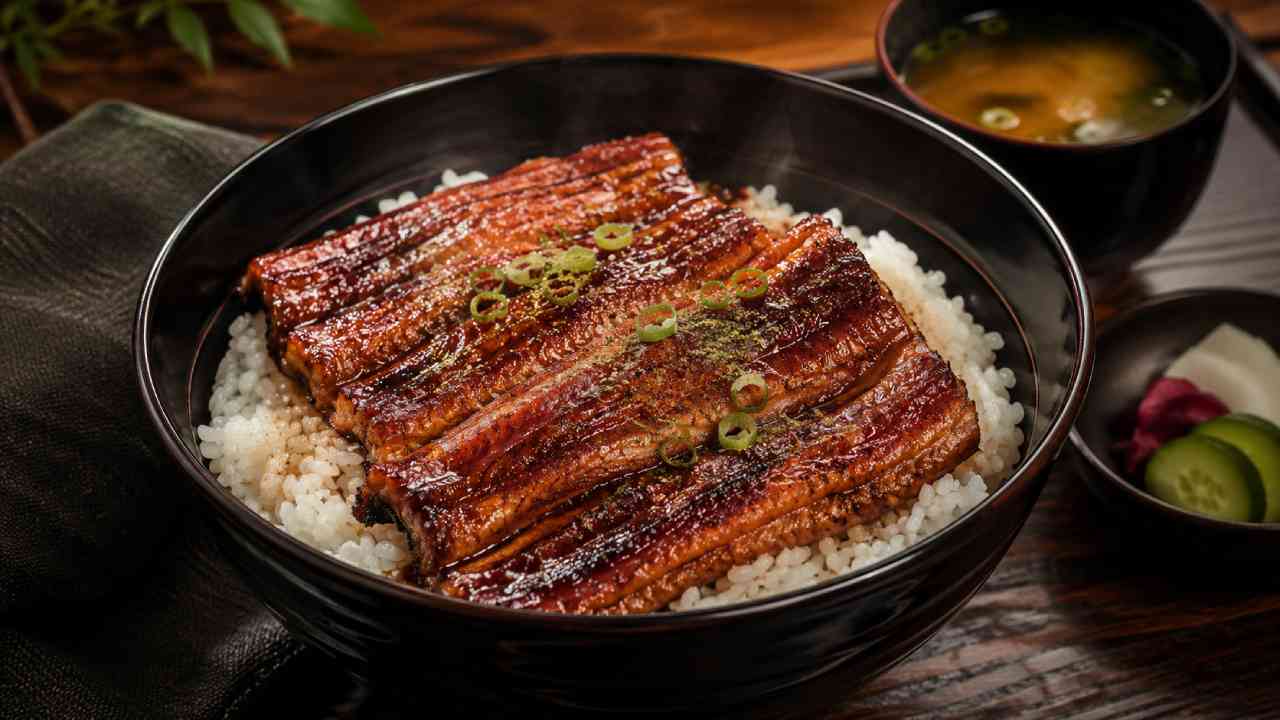
Asian Unagi Don, Japanese Grilled Eel Rice with Sweet Savory Sauce
LoveFoodReadyMeals – Unagi Don is a Japanese rice bowl topped with glazed freshwater eel. It is also widely known as unadon, a shortened form of unagi donburi. The dish looks simple, yet every part has a clear purpose. Warm rice absorbs the dark and glossy sauce. Meanwhile, grilled eel adds a tender texture and smoky aroma. The sauce, commonly called tare, brings sweet, salty, and savory notes together. A small amount of Japanese sansho pepper may be sprinkled on top. Its bright aroma helps balance the rich glaze. Although this Asian dish appears in restaurants, it can also be prepared at home. Ready-cooked unagi kabayaki makes the process safer and more practical. With careful reheating, the eel stays moist while its surface becomes lightly caramelized.
Read Also: Date and Oat Energy Balls, a Naturally Sweet Healthy Snack
Why Grilled Eel Holds a Special Place in Japan
Freshwater eel has appeared in Japanese food culture for centuries. However, kabayaki-style eel became especially popular during the Edo period. The fish is split, deboned, skewered, and cooked over heat. During grilling, cooks brush it several times with tare sauce. Each layer deepens the color and flavor. In Japan, many people enjoy eel during Doyō no Ushi no Hi. This midsummer tradition is associated with eating nourishing food during hot weather. The exact date changes each year because it follows a traditional calendar. Even so, unagi is not limited to one season. Restaurants serve it throughout the year as a comforting yet special meal. Its higher price also means many people view it as an occasional treat rather than everyday food.
Kanto and Kansai Use Different Cooking Methods
Regional techniques give Japanese grilled eel different textures. In the Kanto style, cooks usually split the eel from the back. They grill it lightly, steam it, and then grill it again with sauce. Steaming removes some fat and creates a very tender texture. By contrast, Kansai cooks often split the eel from the belly. They grill it directly without steaming. As a result, the skin becomes crisper and the flavor tastes more roasted. Neither method is automatically better. Instead, each reflects local preferences and culinary traditions. The home recipe below uses ready-cooked kabayaki. Therefore, it does not recreate every professional step. Still, oven or grill reheating can refresh the glaze and produce an enjoyable result.
The Sweet Savory Sauce Defines the Dish
Tare sauce gives Unagi Don its recognizable flavor and glossy appearance. A basic version combines soy sauce, mirin, sake, and sugar. Mirin adds gentle sweetness and shine. Meanwhile, sake provides aroma and helps soften the strong flavor of the fish. Soy sauce contributes saltiness and umami. As the mixture simmers, it thickens into a light glaze. The sauce should coat a spoon but remain easy to brush. If cooked for too long, it may become overly salty or sticky. Therefore, use low heat and watch it closely. Also, remember that packaged unagi often comes with its own sauce. Taste the product before adding more tare. A balanced bowl should taste rich without covering the natural character of the eel.
Ingredients for Homemade Unagi Don
This recipe makes two servings. Using packaged unagi kabayaki is the easiest option for a home kitchen.
For the rice bowl:
- ● 2 ready-cooked unagi kabayaki fillets
- ● 300 grams cooked Japanese short-grain rice
- ● 1 tablespoon sake or water
- ● Sansho pepper, optional
- ● Thinly sliced spring onion, optional
For the tare sauce:
- ● 3 tablespoons Japanese soy sauce
- ● 3 tablespoons mirin
- ● 2 tablespoons sake
- ● 1½ tablespoons sugar
Optional side dishes:
- ● Japanese pickles
- ● Cucumber salad
- ● Miso soup
- ● Steamed edamame
How to Prepare the Sweet Savory Tare
Making the sauce first allows its texture to settle before serving.
- Pour the mirin and sake into a small saucepan.
- Bring the mixture to a gentle simmer over medium-low heat.
- Let it simmer for about one minute to soften the alcohol aroma.
- Add the soy sauce and sugar.
- Stir slowly until the sugar dissolves completely.
- Lower the heat and simmer for three to five minutes.
- Remove the saucepan once the sauce lightly coats a spoon.
- Set it aside to cool slightly. The sauce will thicken as it rests.
Avoid boiling the mixture too aggressively. High heat can make the sugar burn and create a bitter taste. If the sauce becomes too thick, stir in a teaspoon of warm water.
Steps for Reheating and Glazing the Eel
Check the package instructions first because cooking times can vary between products.
- Preheat the oven or countertop grill to 200 degrees Celsius.
- Remove the unagi from its packaging and discard any unwanted sauce.
- Place the fillets skin-side down on a foil-lined baking tray.
- Brush a small amount of sake or water over the surface.
- Cover the tray loosely with foil.
- Heat the eel for five to seven minutes.
- Remove the foil and brush the fillets with tare sauce.
- Grill for another two to three minutes until the glaze bubbles gently.
- Watch closely because the sweet sauce can burn quickly.
- Remove the eel and let it rest for one minute.
- Cut each fillet into serving-sized pieces using a sharp knife.
The eel should reach a safe serving temperature according to its package directions and local food-safety guidance.
How to Assemble the Rice Bowl Properly
Freshly cooked short-grain rice provides the best base for Unagi Don. Its mild flavor balances the rich eel and sauce. First, divide the warm rice between two bowls. Do not press it too firmly because a light texture absorbs the glaze more evenly. Next, drizzle a small amount of tare over the rice. Arrange the sliced eel on top with the glazed side facing upward. Then, brush another thin layer of sauce over the fish. Use restraint because too much glaze can make the bowl overly salty and sweet. Finally, add a small pinch of sansho pepper if desired. Serve the dish immediately while the rice is warm and the eel remains tender.
Tips for Tender Eel and a Glossy Finish
Avoid reheating the eel for too long. Packaged kabayaki is usually already cooked, so it only needs thorough reheating and light caramelization. Covering it during the first stage helps retain moisture. Afterward, a short uncovered grilling period refreshes the glaze. Apply the sauce in thin layers instead of pouring it all at once. This method creates shine without making the surface soggy. If the fillet breaks easily, move it with a wide spatula. Eel is naturally delicate after cooking. In addition, use freshly cooked rice rather than cold or dry rice. The soft grains create a better contrast with the grilled surface. For the cleanest presentation, slice the fillet only after reheating.
Useful Substitutions for a Home Kitchen
Some Japanese ingredients may be difficult to find. Fortunately, a few practical substitutions can work. If sake is unavailable, use water for reheating the eel. For the sauce, a small amount of water can also replace sake. However, the aroma will be simpler. Alcohol-free mirin-style seasoning may replace regular mirin. Since it can contain added sugar and salt, adjust the recipe carefully. Tamari can replace soy sauce when appropriate, but its flavor may be stronger. Long-grain rice is usable, although it will not provide the same soft and slightly sticky texture. Sansho pepper has a distinctive citrus character. If unavailable, simply omit it rather than using a large amount of black pepper.
Side Dishes That Balance the Rich Flavor
Because glazed eel tastes rich, light side dishes work best. Japanese pickles provide acidity and a crisp texture. Cucumber salad also refreshes the palate between bites. Meanwhile, miso soup turns the rice bowl into a more complete meal. Steamed edamame can add color, fiber, and plant protein. However, avoid serving too many heavily seasoned dishes at once. They may compete with the sweet savory glaze. A simple combination often feels more satisfying. In my view, cucumber salad and clear soup create the best contrast. Both support the main dish without hiding its smoky aroma.
Read Also: Chocolate Cloud Cake Recipe, Soft and Melting in Every Bite
Nutrition and Portion Awareness
Eel provides protein and contains fats, including unsaturated fats. It also offers several vitamins and minerals. However, its nutritional profile varies by species, serving size, and preparation. The glaze may add a considerable amount of sodium and sugar. Therefore, it is wise to use the sauce lightly. A balanced meal can include a moderate portion of eel, rice, and vegetables. People following medical diets should consider their individual needs. Packaged products also differ, so check the nutrition label when available. Unagi Don can fit into a varied diet, but it should not automatically be described as a low-calorie or low-sodium meal.
Choosing Eel with Sustainability in Mind
Sustainability is an important issue when buying freshwater eel. Several eel populations face pressure from habitat loss, migration barriers, illegal trade, and high demand. Farming does not always solve the problem because many farms depend on wild-caught juvenile eels. Therefore, sourcing matters. Look for clear species information and traceable supply chains. Reputable sustainability certifications may also help, depending on local availability. Avoid products with vague labels or unknown origins. Regulations and conservation status can change over time. For that reason, current guidance from reliable seafood organizations offers the best reference. Responsible purchasing allows diners to enjoy the dish while remaining aware of its environmental impact.
Unagi Don Turns Simple Ingredients into Something Special
The appeal of Unagi Don comes from contrast. Soft rice meets tender eel, while caramelized sauce adds a smoky sweetness. The dish requires only a few main components, yet careful preparation makes a clear difference. Thin layers of tare create a better result than excessive sauce. Gentle reheating also protects the eel’s delicate texture. Moreover, light side dishes keep the meal balanced. Home cooks may not reproduce every step used by specialist Japanese chefs. Still, ready-cooked kabayaki makes the experience accessible. With thoughtful sourcing and proper preparation, this Asian rice bowl can become a memorable occasional meal.
