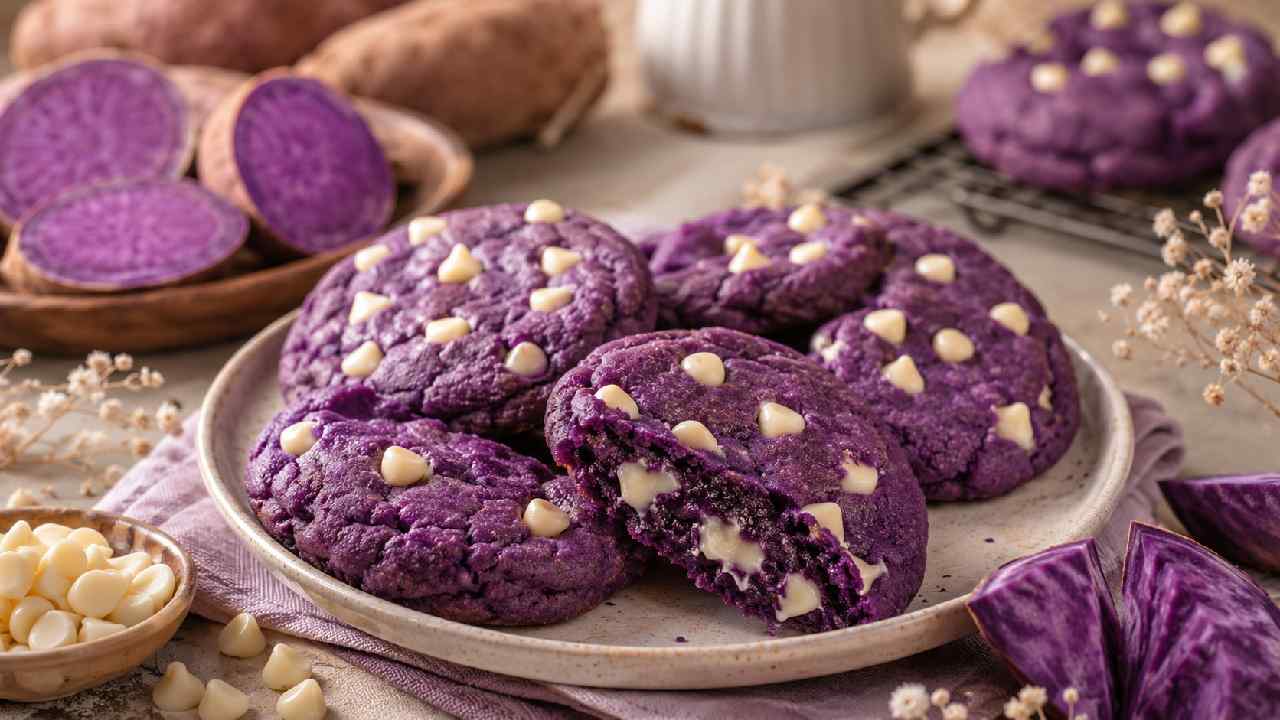
Ube White Chocolate Cookies Combine Chewy Texture With Creamy Sweetness
LoveFoodReadyMeals – A tray of freshly baked cookies usually brings familiar shades of brown and gold. Ube White Chocolate Cookies, however, immediately change that picture. Their purple color creates a striking contrast with creamy pieces of white chocolate. Yet, their appeal goes beyond appearance. Ube brings a mild sweetness with earthy and slightly nutty notes. Meanwhile, white chocolate adds a smooth and milky richness. Together, these flavors turn a familiar cookie into something more distinctive. The texture adds another layer to the experience. Slightly crisp edges can surround a soft, chewy center, while melted chocolate creates creamy pockets throughout each bite. Therefore, the cookie offers several sensations without becoming overly complicated. Its colorful appearance may attract attention first, especially in photos and short videos. However, flavor and texture are what give the idea lasting appeal. Behind that purple color is also a Filipino ingredient with a much deeper culinary story.
Read Also: Crumbl Soda Week Goes Viral With Cola and Dirty Soda Desserts
Ube Brings Filipino Culinary Heritage Into Modern Baking
Ube, or purple yam, has a long-established place in Filipino cooking. It is commonly associated with desserts, including ube halaya, a rich preparation made by cooking purple yam into a thick, sweet mixture. Over time, ube has also appeared in cakes, ice cream, pastries, and other sweets. Cookies provide a more contemporary format for the ingredient. Instead of replacing its traditional identity, the cookie introduces ube through a baked treat that many people already recognize. Consequently, someone unfamiliar with Filipino desserts can encounter the flavor in an approachable way. This cultural connection is important because ube should not be reduced to a trendy purple coloring. Its distinctive appearance comes with culinary history and established uses. Moreover, modern bakers can adapt ube while still acknowledging where the ingredient has long been appreciated. That balance between heritage and experimentation gives Ube White Chocolate Cookies more character than a dessert designed only for visual impact.
Ube Halaya Adds More Than Purple Color
The character of an ube cookie depends heavily on how the ube flavor enters the dough. Some versions use ube halaya, while others rely on ube extract or a combination of ingredients. Ube halaya can contribute moisture, sweetness, and a more recognizable yam character. However, adding a moist ingredient changes how cookie dough behaves. Too much moisture may encourage excessive spreading or create a texture that feels more cake-like than chewy. Therefore, the amounts of flour, fat, sugar, and other ingredients need careful balance. Ube extract can strengthen the aroma and deepen the purple appearance, but it should support rather than overwhelm the cookie. Ideally, the finished dessert should taste like more than vanilla with bright coloring. The ube should remain noticeable beneath the butter, sugar, and chocolate. Once that balance is achieved, another ingredient becomes especially important. White chocolate provides a sweet contrast without completely hiding ube’s gentler flavor.
White Chocolate Creates a Creamy Flavor Contrast
Pairing ube with white chocolate makes sense because neither ingredient depends on strong bitterness. White chocolate contributes sweetness, dairy richness, and a creamy mouthfeel. Ube, in contrast, offers a softer earthy and nutty character. Therefore, the two flavors can complement each other rather than compete. Dark chocolate would create a very different experience because its cocoa intensity could dominate delicate ube notes. White chocolate leaves more room for those flavors to remain noticeable. Moreover, chunks or chips create pockets of melted sweetness inside a warm cookie. That contrast becomes particularly enjoyable when the surrounding dough remains soft and chewy. Still, balance matters. Too much white chocolate can make the cookie excessively sweet and reduce the ube to a background flavor. A thoughtful recipe allows both ingredients to remain identifiable. In this case, the best combination is not necessarily the one with the most chocolate. Instead, it is the one where creamy sweetness makes the purple yam taste more complete.
Crispy Edges and Chewy Centers Define the Experience
Flavor attracts attention, but texture often determines whether a cookie feels memorable. Ube White Chocolate Cookies work especially well when they combine lightly crisp edges with a soft center. The outside provides enough structure to hold the cookie together. Meanwhile, the middle stays tender and slightly chewy. White chocolate pieces add another texture as they soften during baking. Consequently, a single bite can move from a delicate crispness into a softer, creamier center. Achieving that contrast depends on several factors, including ingredient ratios, dough temperature, cookie size, and baking time. Overbaking can quickly remove the softness that makes the center appealing. On the other hand, removing cookies too early may leave them without enough structure. Resting them briefly on the baking tray can help because residual heat continues the cooking process. Therefore, good texture is less about one secret ingredient and more about controlling several small details throughout the baking process.
Read Also: Premium Bread Trends Dominating the Bakery World in 2026
Coconut Can Add Another Layer Without Taking Over
Once ube and white chocolate establish the main flavor profile, coconut becomes a natural supporting ingredient. Coconut already appears alongside ube in many Filipino sweets, so the combination has a strong culinary connection. Toasted coconut flakes can introduce a light crunch and deeper aroma. Meanwhile, coconut-based ingredients can strengthen the tropical character of the cookie. However, restraint is useful here. Ube has a relatively gentle flavor, and too many additions can easily push it into the background. Therefore, coconut works best as an accent rather than the dominant element. A small amount on top can also provide visual contrast against the purple dough and pale chocolate. Other additions require the same consideration. Nuts may enhance the earthy side of ube, while a small amount of salt can balance the overall sweetness. Nevertheless, each extra ingredient should have a clear purpose. The strongest cookies often succeed because their flavors remain focused rather than crowded.
Their Purple Color Makes These Cookies Highly Visual
It is difficult to discuss modern ube desserts without mentioning their visual appeal. Purple cookies naturally stand apart from traditional chocolate chip or sugar cookies. Add pieces of white chocolate, and the contrast becomes even stronger. As a result, Ube White Chocolate Cookies photograph particularly well. Breaking a warm cookie in half can reveal a soft purple center dotted with partially melted chocolate. That moment works especially well in short-form food videos because viewers can immediately understand the texture. However, visual appeal can create unrealistic expectations if flavor becomes secondary. A cookie may earn attention because of its color, but people return to a dessert because it tastes good. Therefore, successful ube baking should treat appearance as an advantage rather than the entire purpose. The purple hue introduces the dessert, while texture and flavor complete the experience. This balance also explains why ube has moved so comfortably between traditional sweets and contemporary bakery creations.
A Traditional Ingredient Finds a New Cookie Story
The most interesting part of Ube White Chocolate Cookies is not simply that they are purple. They represent what can happen when a culturally significant ingredient enters a familiar modern format. Ube brings Filipino culinary heritage, while the cookie provides an internationally recognizable canvas. White chocolate then creates a creamy bridge between the earthy yam flavor and the buttery dough. Consequently, the finished dessert feels both approachable and distinctive. It can introduce new audiences to ube without pretending the ingredient itself is new. That distinction matters as traditional foods gain wider attention through social media and contemporary baking. Trends move quickly, but cultural ingredients often have stories that stretch far beyond the latest viral recipe. Ube is a clear example. Its modern cookie form may look playful and fresh, yet its identity reaches back much further. Ultimately, the best version celebrates both sides: a soft, chewy contemporary cookie and the Filipino purple yam that gives it unmistakable character.
