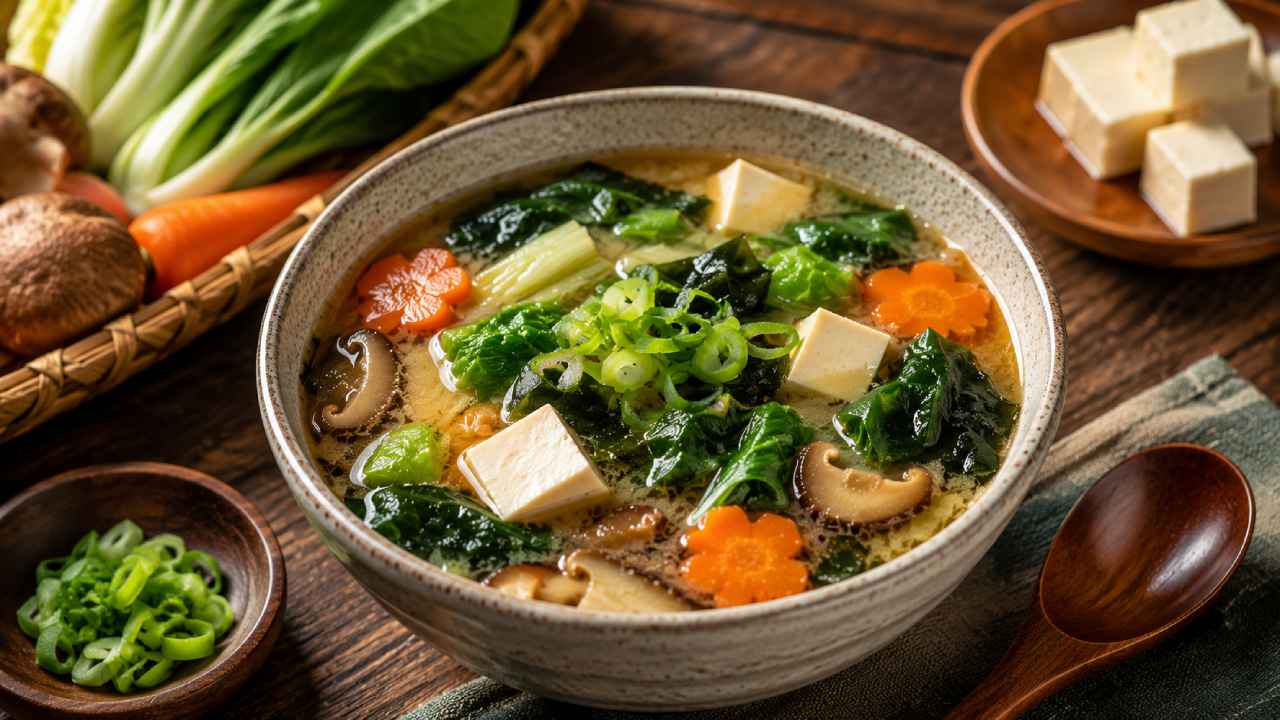
Nourishing Miso Vegetable Soup Full of Fresh Vegetables
LoveFoodReadyMeals – Miso Vegetable Soup has earned a place in healthy kitchens because it combines wholesome vegetables with the deep umami flavor of fermented miso. Unlike heavy cream-based soups, this Japanese favorite feels light while still providing satisfying nutrition. In addition, it offers a comforting balance of warm broth, soft tofu, and crisp vegetables that work well together. Many people choose this soup as part of a balanced diet because it is naturally lower in calories while remaining rich in vitamins, minerals, and plant-based protein. Furthermore, preparing Miso Vegetable Soup at home allows you to control the sodium level and select fresh seasonal vegetables. As a result, every bowl becomes both nourishing and flavorful. Whether served for lunch, dinner, or a light evening meal, this soup delivers comfort without feeling overly filling.
Read Also: Easy Padang Shrimp Recipes with Rich and Spicy Seafood Taste
The Authentic Flavor Behind Miso Vegetable Soup
The signature taste of Miso Vegetable Soup comes from the harmony between Japanese miso paste and a delicate broth. Traditionally, the soup uses dashi, which creates a clean umami foundation. However, vegetable broth also works beautifully for vegetarian cooking. Miso itself is made from fermented soybeans, giving the soup a savory depth that cannot easily be replaced. Moreover, vegetables such as carrots, mushrooms, spinach, cabbage, and bok choy contribute natural sweetness and texture. Tofu adds gentle creaminess while increasing the protein content. Unlike soups that rely on heavy seasoning, this recipe lets fresh ingredients shine naturally. Therefore, every spoonful feels balanced instead of overpowering. The combination of fermented ingredients and colorful vegetables creates a meal that is simple, nutritious, and satisfying.
Ingredients for Miso Vegetable Soup
Prepare these ingredients before you begin cooking.
Main Ingredients
- 1 liter vegetable broth or dashi
- 3 tablespoons white miso paste
- 150 grams firm tofu, diced
- 1 medium carrot, thinly sliced
- 100 grams shiitake mushrooms, sliced
- 1 cup baby spinach
- 1 cup napa cabbage, chopped
- 1 small bok choy, chopped
- 2 spring onions, sliced
- 1 teaspoon grated fresh ginger
- 1 teaspoon sesame oil
- 1 tablespoon soy sauce (optional)
- 1 teaspoon toasted sesame seeds
- Dried wakame seaweed, soaked (optional)
Step-by-Step Miso Vegetable Soup Recipe
Follow these simple steps for the best results.
- Heat the vegetable broth or dashi in a medium pot over medium heat.
- Add the sliced carrots and cook for about four minutes.
- Stir in the mushrooms and continue cooking for another three minutes.
- Add the napa cabbage and bok choy.
- Simmer until the vegetables become slightly tender.
- Add the tofu cubes carefully.
- Stir in the grated ginger and sesame oil.
- Reduce the heat to low.
- Place the miso paste into a small bowl.
- Mix the miso paste with a few tablespoons of warm broth until smooth.
- Pour the dissolved miso back into the soup.
- Stir gently without allowing the soup to boil.
- Add the spinach and soaked wakame.
- Cook for one minute until the spinach wilts.
- Garnish with sliced spring onions and toasted sesame seeds before serving.
Helpful Tips for Better Miso Vegetable Soup
These simple tips help create a flavorful and nutritious soup.
- Use fresh vegetables for brighter flavor and better texture.
- Avoid boiling the soup after adding the miso paste.
- Dissolve the miso separately before mixing it into the broth.
- Choose white miso for a mild and balanced taste.
- Add leafy vegetables near the end of cooking.
- Use firm tofu to keep its shape.
- Taste the soup before adding soy sauce because miso already contains salt.
- Add mushrooms for extra natural umami.
- Serve the soup immediately while it is warm.
- Store leftovers in the refrigerator for up to two days and reheat gently.
Fresh Vegetables Make Every Bowl More Nutritious
The quality of vegetables plays an important role in every Miso Vegetable Soup recipe. Fresh carrots provide natural sweetness, while mushrooms contribute earthy flavor and satisfying texture. Meanwhile, leafy greens such as spinach and bok choy add vibrant color together with essential vitamins. Napa cabbage softens beautifully during cooking and blends perfectly with the delicate broth. In addition, seasonal vegetables allow you to adjust the recipe throughout the year without losing its authentic character. Many home cooks also include broccoli, snow peas, or zucchini for extra variety. As long as the vegetables remain fresh and lightly cooked, they preserve both texture and nutrients. Consequently, every serving becomes more enjoyable while supporting a balanced daily diet.
Read Also: Organic Cheesecake Emerges as a Premium Dessert Crafted from High-Quality Organic Ingredients
Health Benefits of Miso Vegetable Soup
Miso Vegetable Soup offers much more than comforting flavor. Fermented miso contains beneficial compounds created during fermentation, while tofu supplies plant-based protein that supports muscle maintenance. Furthermore, the colorful vegetables provide dietary fiber, vitamin A, vitamin C, vitamin K, potassium, and antioxidants. Because the soup contains a large amount of broth, it also helps maintain hydration throughout the day. At the same time, its moderate calorie content makes it suitable for people who want satisfying meals without excessive energy intake. However, individuals watching their sodium intake should choose lower-sodium miso or reduce additional soy sauce. When enjoyed as part of a varied eating pattern, this soup becomes a wholesome addition to a healthy lifestyle.
Serving Ideas That Complete the Meal
Miso Vegetable Soup pairs well with many healthy side dishes. For example, steamed brown rice creates a balanced meal while keeping the flavors simple. Likewise, grilled salmon or baked chicken breast adds extra protein without overpowering the delicate broth. If you prefer a vegetarian menu, serve the soup with edamame or a fresh cucumber salad. Additionally, whole-grain rice balls or light sushi rolls complement the Japanese-inspired flavors beautifully. A sprinkle of toasted sesame seeds or fresh herbs also enhances the final presentation. Since the soup is naturally light, it works equally well as a starter or a complete meal. Therefore, you can easily enjoy it during lunch, dinner, or even a cozy weekend gathering.
Why Miso Vegetable Soup Deserves a Place in Your Weekly Menu
Miso Vegetable Soup proves that healthy cooking does not need to be complicated. With only a handful of fresh ingredients and simple preparation, this recipe delivers comforting flavors together with impressive nutritional value. Moreover, it adapts easily to different dietary preferences because you can replace or add vegetables according to the season. The combination of fermented miso, tofu, and colorful vegetables creates a meal that feels both satisfying and refreshing. Although the recipe remains rooted in Japanese culinary tradition, it fits naturally into modern healthy lifestyles around the world. Ultimately, Miso Vegetable Soup offers a practical way to enjoy wholesome ingredients while creating warm, delicious meals that everyone at the table can appreciate.
