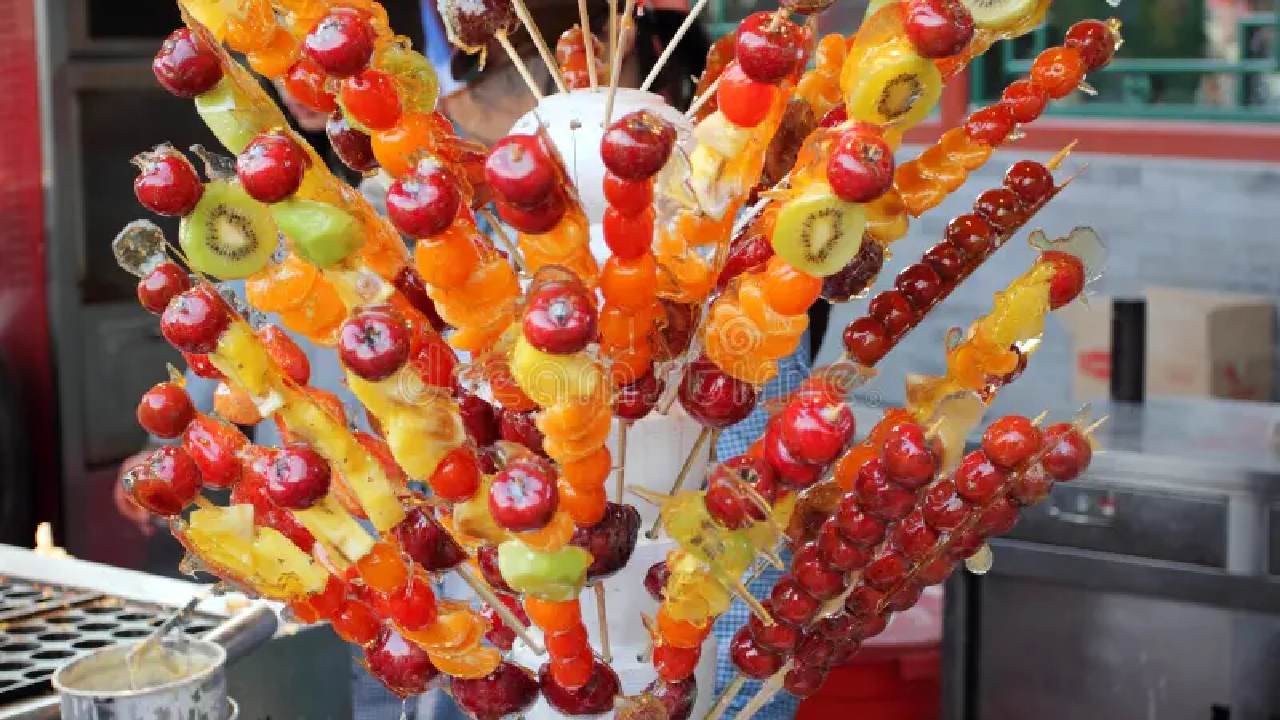
Candied Haws in China: A Sweet Street Snack Rooted in History and Memory
LoveFoodReadyMeals – Candied haws, widely known as tanghulu, trace their roots deep into Chinese history, particularly in northern China. Traditionally made from hawthorn berries coated in hardened sugar syrup, this snack dates back hundreds of years. Folklore often links its origin to the imperial era, when hawthorn was valued for its medicinal properties, believed to aid digestion and circulation. Over time, what began as a health-inspired treat evolved into a popular street snack enjoyed by all ages. Vendors began skewering the fruit on bamboo sticks, making it portable and visually striking. This simple format helped tanghulu travel from palace stories into everyday life. Today, candied haws remain a living reminder of how Chinese food culture often blends practicality, symbolism, and pleasure in one bite.
Hawthorn Fruit and Its Symbolic Meaning
The hawthorn berry plays a central role in the identity of candied haws. Its naturally tart flavor creates a sharp contrast with the sweet sugar coating, producing a balance that many associate with Chinese culinary philosophy. Beyond taste, hawthorn carries symbolic meaning. In traditional Chinese medicine, it represents digestion, vitality, and balance within the body. Families historically gave hawthorn-based snacks to children after heavy meals, reinforcing the idea that food could also be functional. The bright red color of the berries adds another layer of symbolism, as red is associated with luck, joy, and celebration in Chinese culture. When seen glistening under a sugar shell, candied haws become more than food. They reflect harmony between health beliefs, aesthetics, and tradition.
“Read More : Napoleon Cake, a Legendary Layered Dessert Rooted in History”
Street Vendors and the Winter Cityscape
Candied haws are most closely associated with winter streets in northern Chinese cities like Beijing and Tianjin. As temperatures drop, vendors appear with wooden racks displaying rows of glossy red skewers. The cold weather plays a practical role, helping the sugar coating harden quickly into a crisp shell. For many locals, the sight of these vendors signals the arrival of winter itself. Children tug at their parents’ sleeves, while adults pause, momentarily transported back to their own childhoods. The snack becomes part of the urban rhythm, woven into daily commutes and evening strolls. Street vendors, often family-run, pass down techniques and locations across generations, making candied haws a small but enduring fixture of city life.
The Craft Behind the Crunchy Sugar Shell
Making candied haws looks simple, but it requires precision and timing. Vendors heat sugar and water to an exact temperature, watching closely as the syrup transforms. Too cool, and it won’t harden properly. Too hot, and it turns bitter. Once ready, the hawthorn skewers are dipped swiftly, then cooled almost immediately. The result is a thin, glass-like shell that cracks gently when bitten. This crunch is essential to the experience. It contrasts with the soft, tangy fruit inside. Many skilled vendors take pride in achieving that perfect balance. Their expertise often comes from years of repetition rather than formal training. This quiet craftsmanship reflects a broader tradition in Chinese street food, where mastery grows through daily practice.
“Read More : Hawaiian Sweet Cinnamon Rolls That Redefine Soft, Fluffy Perfection”
Modern Variations and New Ingredients
While traditional candied haws use hawthorn, modern versions have expanded to include strawberries, grapes, kiwi, and even cherry tomatoes. These variations appeal to younger consumers and tourists seeking novelty. Despite the changes, the core technique remains the same, preserving a connection to the past. Some vendors mix fruits on one skewer, creating colorful combinations that feel playful and contemporary. Social media has amplified this evolution, turning candied haws into a visual trend as much as a snack. Yet even with innovation, hawthorn remains the benchmark. Many purists believe no fruit matches its sharpness and cultural weight. The coexistence of classic and modern styles shows how Chinese food culture adapts without erasing its roots.
Candied Haws as a Memory of Childhood
For many Chinese people, candied haws are inseparable from childhood memories. The first crack of sugar against teeth, the rush of sweetness followed by sourness, and sticky fingers on cold days form sensory imprints that last for decades. Parents often buy tanghulu as small rewards, making it emotionally tied to care and comfort. Even adults who rarely eat sweets may feel nostalgia when they see the bright red skewers. In this way, candied haws function as edible memory. They connect generations through shared experiences rather than recipes alone. As cities modernize and food options multiply, this simple snack continues to evoke warmth, proving that some traditions endure not because they change, but because they remind people who they once were.
