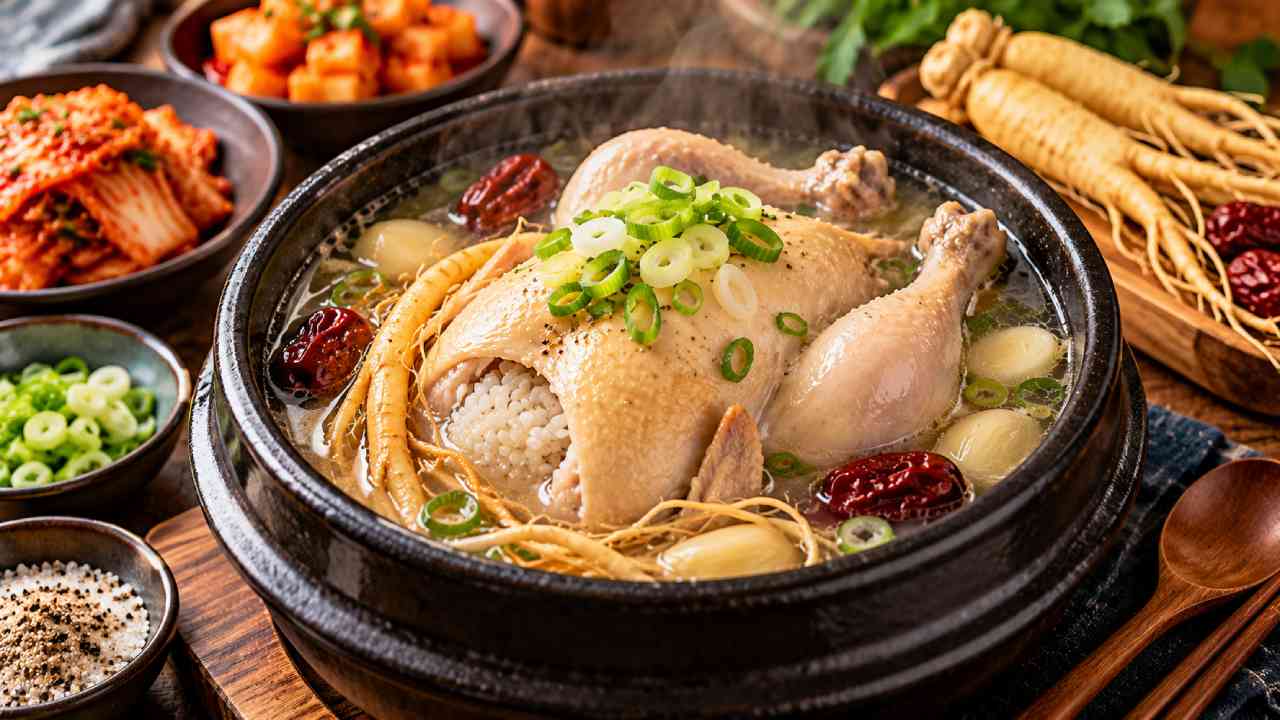
Samgyetang A Traditional Korean Dish from East Asian Cuisine
LoveFoodReadyMeals – Samgyetang is one of the most distinctive dishes in Korean cuisine. At first glance, it looks like a simple chicken soup. However, its preparation reveals much more. A small whole chicken is filled with glutinous rice, garlic, jujubes, and ginseng. It is then simmered until the meat becomes tender and the broth develops a delicate flavor. Unlike spicy Korean soups, Samgyetang usually has a mild and clean taste. The ginseng provides an earthy aroma, while garlic adds savory depth. Meanwhile, the rice absorbs flavor from inside the chicken as it cooks. This combination gives the dish a comforting character without requiring heavy seasoning. As part of East Asian cuisine, Samgyetang also shows how Korean cooking often connects ingredients with seasonality and tradition. Therefore, the dish is not only interesting as a recipe. It also offers a window into the cultural story surrounding Korean food.
Read Also: Focaccia Sandwich Takes the Spotlight with Thick Bread and Generous Fillings
Why Koreans Traditionally Enjoy This Hot Soup in Summer
One of the most fascinating things about Samgyetang is its connection with hot weather. Many people outside Korea may expect steaming chicken soup to be a winter meal. In Korea, however, Samgyetang is famously associated with summer. It is especially connected with Sambok, the traditional period marking some of the hottest days of the season. This custom is often linked to the idea of yi yeol chi yeol, commonly understood as fighting heat with heat. As a result, people may enjoy a steaming bowl of chicken soup even when temperatures are already high. Historically, the dish has also been valued as a nourishing meal during physically demanding summer conditions. Today, that cultural connection remains an important part of its identity. From a culinary perspective, this contrast makes Samgyetang particularly memorable. Few dishes communicate Korean seasonal food traditions as clearly while remaining approachable enough for home cooks to explore.
Ginseng, Jujubes, and Garlic Create Its Distinctive Flavor
The ingredients inside Samgyetang may look simple, yet each contributes something different. Fresh ginseng is perhaps the most recognizable component. It gives the broth an earthy, slightly bitter aroma. However, it should not overpower the chicken. Jujubes, also called dried red dates, add a subtle sweetness that balances the herbal character. Garlic brings another layer of savory flavor. Meanwhile, glutinous rice absorbs the chicken juices and broth as it cooks. The result is soft, comforting rice hidden inside the bird. Some variations may also include chestnuts or additional aromatic ingredients. Still, adding too many extras can distract from the clean character of the soup. In my view, simplicity is one of the dish’s strongest qualities. Rather than depending on an intense sauce, it allows chicken, herbs, and rice to develop gradually through simmering. That restraint makes Samgyetang noticeably different from many strongly seasoned East Asian chicken dishes.
Samgyetang Recipe Ingredients for a Traditional Korean Meal
Making Samgyetang at home becomes easier when the ingredients are prepared before cooking. A small young chicken works best because it fits comfortably inside a pot and cooks relatively evenly. If Korean fresh ginseng is unavailable, check a Korean or Asian grocery store for suitable ginseng intended for cooking. Avoid substituting concentrated ginseng supplements because they are not designed for the same culinary purpose.
Main ingredients:
● 1 small whole chicken, about 800 g–1 kg
● ½ cup glutinous rice
● 1–2 small fresh ginseng roots
● 4–6 garlic cloves, peeled
● 2–3 dried jujubes
● 2 green onions, sliced
● 1.5–2 liters water, or enough to cover most of the chicken
● Salt, to taste
● Ground black pepper, to taste
Optional additions:
● 2 peeled chestnuts
● 1 small piece of ginger
● Extra sliced green onions for serving
The exact amount of water can vary depending on the size and shape of your pot.
How to Make Samgyetang Step by Step at Home
The preparation of Samgyetang is straightforward, but careful stuffing and gentle cooking produce better results. Most importantly, do not pack the chicken cavity too tightly. Glutinous rice expands while cooking and needs enough room to soften properly.
- Rinse the glutinous rice several times until the water becomes clearer.
- Soak the rice in clean water for about 30–60 minutes. Then, drain it well.
- Remove any giblets from the chicken and trim excess fat if necessary.
- Rinse the ginseng and jujubes thoroughly. Clean the chicken according to safe kitchen practices and pat the exterior dry.
- Place part of the soaked rice inside the chicken cavity.
- Add several garlic cloves, one jujube, and a small ginseng root.
- Do not overfill the cavity. Leave space for the rice to expand.
- Place the stuffed chicken in a deep pot.
- Add the remaining garlic, ginseng, jujubes, and water.
- Bring the liquid to a boil. Then, reduce it to a steady, gentle simmer.
- Cook until the chicken is fully cooked, tender, and the rice inside is soft. Depending on size and heat, this may take around 60–90 minutes.
- Check the thickest part of the chicken with a food thermometer. Poultry should reach a safe internal temperature of 165°F or 74°C.
- Skim excess foam or fat from the surface if desired.
- Transfer the chicken and broth to a large serving bowl.
- Finish with sliced green onions. Serve salt and pepper separately so each person can season the soup to taste.
Gentle Simmering Keeps the Chicken Tender and Broth Clean
Cooking temperature plays an important role in Samgyetang. An aggressive boil may break down the chicken too quickly and make the broth appear cloudier. Instead, bring the water to a boil first and then reduce the heat. A steady simmer allows the chicken to cook gradually while the ginseng, garlic, and jujubes release their flavors. The chicken should eventually become tender enough to pull apart easily. However, it still needs to reach a safe internal temperature. Using a food thermometer removes much of the guesswork. Another useful step is skimming foam from the surface during the early stage of cooking. This is mainly a matter of presentation rather than necessity, but it can create a cleaner-looking broth. Moreover, avoid seasoning heavily at the beginning. Samgyetang traditionally has a gentle flavor, and diners can add salt at the table. This approach preserves the natural taste of the chicken and aromatic ingredients.
Tips for Making Better Samgyetang Without Overcomplicating It
Good Samgyetang depends more on careful preparation than complicated techniques. These practical tips can help keep the rice tender, chicken juicy, and broth pleasantly balanced.
- Choose a small chicken so it cooks evenly and fits easily inside the pot.
- Soak the glutinous rice before stuffing the chicken. This helps it cook more evenly.
- Never fill the cavity completely because the rice expands during cooking.
- Use culinary ginseng rather than concentrated supplements or extracts.
- Keep the broth at a gentle simmer after it reaches a boil.
- Skim surface foam when you want a cleaner-looking broth.
- Avoid adding too much salt during cooking.
- Check the chicken with a food thermometer rather than judging it only by appearance.
- Add green onions near serving time so their flavor stays fresh.
- Serve salt and pepper on the side for individual seasoning.
- Pair the soup with kimchi or kkakdugi for a sharper flavor contrast.
- Serve the dish while hot, since its comforting character is strongest when the broth is steaming.
Glutinous Rice Hidden Inside the Chicken Makes It Unique
One detail that separates Samgyetang from ordinary chicken soup is the glutinous rice cooked inside the bird. As the chicken simmers, the grains absorb moisture and savory juices. Therefore, the rice becomes soft and flavorful without requiring a separate cooking pot. When the chicken is opened at the table, the rice inside creates another layer of texture. It also makes the dish more substantial. However, this technique requires enough cooking time for both the poultry and stuffing to cook safely. That is why soaking the rice beforehand is useful. It gives the grains a head start before they enter the pot. Moreover, leaving enough room inside the cavity allows them to expand. From a storytelling perspective, this hidden filling also makes the dish visually interesting. Samgyetang may appear simple from the outside, but opening the tender chicken reveals the rice, garlic, jujube, and ginseng tucked inside.
Read Also: Steak au Poivre Recipe: How to Make Classic French Steak
Samgyetang and Dak Gomtang Are Not the Same Korean Soup
Although both dishes feature chicken broth, Samgyetang and Dak Gomtang have different identities. Samgyetang usually presents a small whole chicken filled with glutinous rice and aromatic ingredients. Ginseng is particularly important to its recognizable character. In contrast, Dak Gomtang generally focuses on chicken and broth, often with meat served in pieces or shredded. The flavor profile and presentation can therefore feel different. Samgyetang also carries a particularly strong association with Korean summer food traditions. This cultural context helps distinguish it from a general bowl of chicken soup. Understanding the difference is useful when writing about East Asian cuisine because dishes that appear similar can carry different histories and serving customs. Rather than describing every Korean chicken soup as interchangeable, it is better to highlight those distinctions. Doing so gives readers more useful information while respecting the culinary identity behind each recipe.
Kimchi and Kkakdugi Add Contrast to the Mild Broth
Because Samgyetang has a relatively delicate flavor, strongly flavored side dishes can create an enjoyable contrast. Kimchi is an obvious companion. Its fermented acidity, chili heat, and crunchy vegetables cut through the richness of the chicken. Kkakdugi, or cubed radish kimchi, works particularly well for the same reason. Some diners also prepare a small dish of salt and pepper for dipping pieces of chicken. This allows the broth to remain lightly seasoned while individual bites can taste more intense. When serving Samgyetang at home, there is little need to prepare a large collection of side dishes. One or two varieties of kimchi can be enough. In fact, keeping the table simple allows the chicken soup to remain the main attraction. The contrast between steaming herbal broth and cool, tangy fermented vegetables creates a dining experience that feels distinctly Korean while remaining easy to recreate outside Korea.
Samgyetang Shows the Comforting Side of East Asian Cuisine
Samgyetang represents a quieter side of East Asian cooking. It does not rely on fiery chili, thick sauces, or an extensive spice mixture. Instead, its appeal comes from tender chicken, soft rice, aromatic ginseng, and a warm broth. At the same time, the dish carries a cultural story that makes it more meaningful than an ordinary chicken soup. Its association with the Korean summer, particularly the Sambok period, can initially seem surprising. Yet that tradition is precisely what makes the dish memorable. For home cooks, Samgyetang also provides an accessible way to explore Korean cuisine beyond barbecue, fried chicken, and spicy stews. The recipe requires patience, but the basic process is simple. More importantly, each ingredient has a clear role. When those elements come together, the result is comforting, aromatic, and unmistakably Korean. That combination explains why this traditional soup remains such an interesting introduction to Korea’s place within the wider world of East Asian cuisine.
