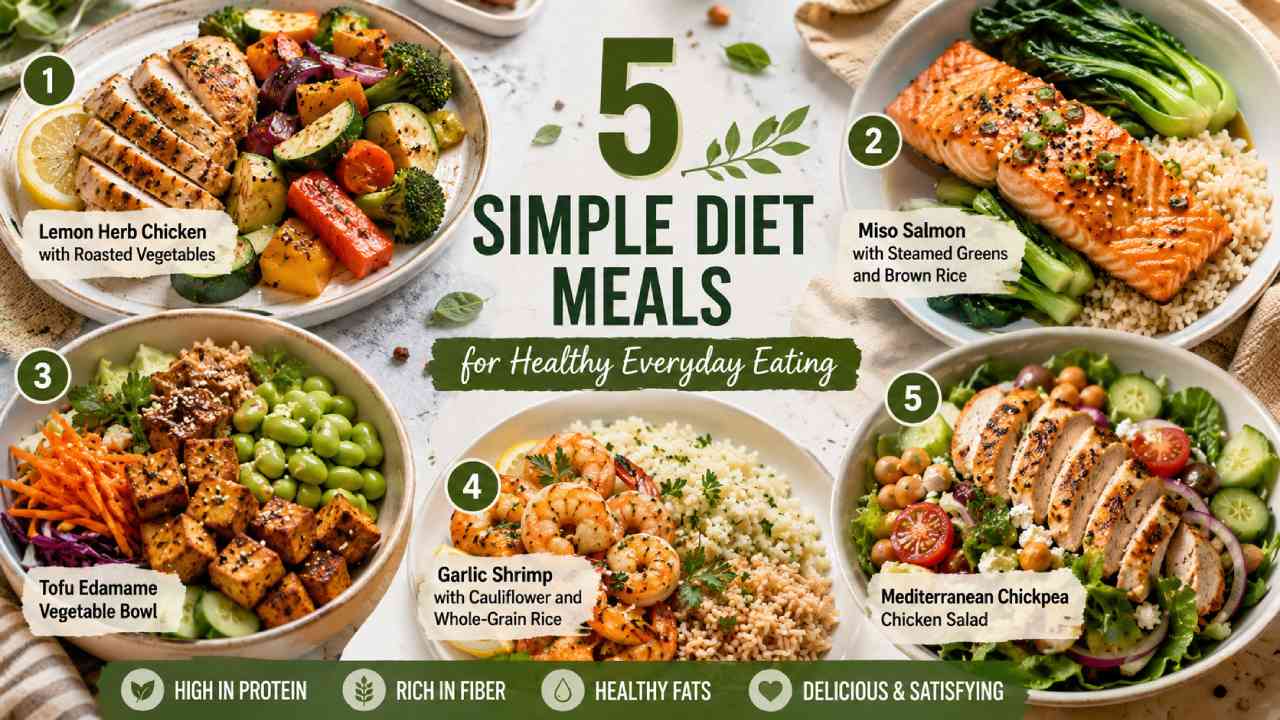
5 Simple Diet Meals for Healthy Everyday Eating
LoveFoodReadyMeals – Healthy eating becomes easier when everyday meals are practical, flavorful, and satisfying. A Simple Diet does not need to rely on tiny portions or repetitive salads. Instead, balanced meals can combine vegetables, protein, whole-food carbohydrates, and healthy fats in reasonable portions. This approach also makes healthy eating easier to maintain because familiar ingredients can still remain on the menu. For example, chicken, fish, tofu, vegetables, and whole grains can create countless combinations without complicated cooking techniques. Moreover, preparing meals at home gives you greater control over added oil, sauces, and portion sizes. The following five meal ideas focus on simplicity rather than strict rules. Each one can also be adjusted according to personal preferences, activity levels, dietary needs, and available ingredients.
Read Also: Healthy Pumpkin Soup Brings Creamy Comfort Without Heavy Cream
1. Teriyaki Tofu Stir-Fry With Mixed Vegetables
A tofu stir-fry is another practical option for a Simple Diet because it is quick, flexible, and easy to prepare with everyday ingredients. Firm tofu provides plant-based protein, while a mix of vegetables adds fiber, color, and texture. Start by cutting tofu into cubes and pan-searing it with a small amount of oil until the surface becomes lightly golden. Then, add vegetables such as broccoli, carrots, snap peas, bell peppers, and mushrooms. For flavor, use a light teriyaki-style sauce made from soy sauce, garlic, ginger, and a touch of honey or natural sweetener. Stir everything together until the vegetables are tender but still slightly crisp. For a more complete meal, serve it with brown rice, quinoa, or even whole-wheat noodles. This dish is also suitable for meal preparation because it reheats well and the sauce continues to absorb into the tofu and vegetables over time. By changing the vegetable mix or adjusting the sauce intensity, the same basic recipe can feel different while still remaining simple and balanced.
2. Miso Salmon With Steamed Greens and Brown Rice
Salmon can bring both richness and variety to healthy everyday eating. Its naturally distinctive flavor means it needs relatively little preparation. For this meal, a light mixture of miso, ginger, garlic, and a small amount of sesame oil can create a savory glaze. Bake or grill the salmon until cooked through. Meanwhile, steam vegetables such as bok choy, broccoli, spinach, or green beans. A serving of brown rice can complete the plate and provide a familiar carbohydrate source. However, sauce portions deserve attention because miso and other condiments can contribute significant sodium. Therefore, a thin coating is usually enough to provide flavor. This Simple Diet meal also demonstrates an important principle: healthy food does not have to taste plain. Strong ingredients such as ginger, citrus, herbs, and spices can make balanced meals more enjoyable without depending entirely on rich sauces.
3. Tofu Edamame Vegetable Bowl
Plant-based meals can provide an easy way to introduce more variety into a weekly menu. A tofu and edamame bowl combines plant protein with vegetables and a flexible base. First, press firm tofu to remove excess moisture. Then, bake or pan-sear it with minimal oil until the edges become golden. Add cooked edamame alongside shredded cabbage, cucumber, carrots, leafy greens, or roasted broccoli. Brown rice or quinoa can provide additional energy and texture. For dressing, combine lime juice, ginger, a little sesame oil, and reduced-sodium soy sauce. The result feels fresh but still substantial. Furthermore, the ingredients can be prepared separately and assembled when needed. This makes the bowl useful for busy weekdays. Within a Simple Diet, meals like this also help prevent dependence on one protein source. Variety can make a healthier eating routine feel less repetitive over time.
4. Garlic Shrimp With Cauliflower and Whole-Grain Rice
Shrimp cooks quickly, which makes it especially useful when there is little time for dinner. Heat a small amount of olive oil, then add garlic, shrimp, black pepper, and a squeeze of lemon. In another pan, lightly sauté cauliflower rice with chopped vegetables. However, cauliflower does not need to replace all traditional rice. Mixing cauliflower rice with a smaller portion of brown or other whole-grain rice creates a satisfying compromise. You keep the familiar texture while adding more vegetables to the meal. Fresh herbs, chili flakes, or paprika can provide additional flavor. This approach illustrates why a Simple Diet can work better when it avoids unnecessary extremes. Healthy eating does not require eliminating every favorite ingredient. Instead, changing proportions can sometimes be enough. Increasing vegetables while keeping suitable portions of familiar foods often produces a meal that feels both nutritious and enjoyable.
5. Mediterranean Chickpea Chicken Salad
A substantial salad should contain more than lettuce. This Mediterranean-inspired version combines grilled chicken, chickpeas, cucumber, tomatoes, leafy greens, red onion, and fresh herbs. Chickpeas contribute fiber and plant protein, while chicken adds another substantial protein source. A simple dressing made with lemon juice, olive oil, black pepper, and herbs keeps the flavors bright. If desired, a small amount of feta can add a salty contrast. Unlike heavily dressed salads, this version relies on fresh ingredients for much of its flavor. It is also easy to modify. Chicken can be replaced with tuna, tofu, or additional beans depending on preference. For people following a Simple Diet, this flexibility matters because sustainable eating rarely comes from following one exact recipe forever. A useful meal should provide a basic structure that can adapt to ingredients already available in the kitchen.
Why Protein Matters in Everyday Meals
Protein is often discussed in relation to exercise, but its role extends well beyond the gym. It contributes to the maintenance and repair of body tissues and supports many essential biological processes. Protein-containing foods can also help create meals that feel substantial. Fortunately, there is no need to depend on a single source. Chicken, fish, eggs, tofu, beans, lentils, yogurt, and other foods can all contribute to daily intake. A Simple Diet therefore becomes more interesting when protein sources rotate throughout the week. For example, chicken may work for Monday lunch, while tofu or lentils can provide variety later. Individual protein needs differ according to factors such as body size, age, health, and physical activity. Consequently, rigid portion recommendations do not suit everyone. The more practical goal is to build balanced meals around appropriate portions and adjust them according to personal nutritional needs.
Vegetables Make Simple Meals More Varied
Vegetables are valuable not only because of their nutrients but also because they change how a meal looks and feels. Crunchy cucumber, roasted carrots, tender broccoli, and leafy greens provide different textures on the same plate. As a result, healthy meals can become visually appealing without complicated recipes. One useful strategy is to choose several vegetables with different colors rather than relying on the same option every day. Frozen vegetables are also practical because they reduce preparation time and can help minimize food waste. Moreover, cooking methods matter for enjoyment. Someone who dislikes boiled broccoli may enjoy it roasted with garlic and black pepper. Therefore, a Simple Diet should leave room for experimentation. The best vegetable is not necessarily the most fashionable one. In everyday life, it is often the vegetable you enjoy enough to eat regularly and can prepare without unnecessary difficulty.
Carbohydrates Do Not Need to Disappear
Diet culture sometimes presents carbohydrates as something that must be removed completely. Yet carbohydrate-containing foods can be part of a balanced eating pattern. The practical questions involve type, portion, and overall meal composition. Whole grains, potatoes, sweet potatoes, beans, fruit, and other carbohydrate sources can provide energy alongside useful nutrients. Pairing them with protein, vegetables, and suitable fats creates a more complete meal. For example, brown rice can accompany salmon and steamed vegetables instead of dominating the entire plate. Similarly, sweet potato can complement chicken and salad. A Simple Diet becomes easier to maintain when it does not create unnecessary fear around ordinary foods. Unless someone has a medical or dietary reason to restrict a particular ingredient, balance is generally more realistic than extreme elimination. This approach also makes social meals and home cooking considerably easier to navigate.
Read Also: Medovik Cake Charms with Thin Honey Layers and Silky Cream
Flavor Is Essential for Sustainable Healthy Eating
One reason healthy eating plans fail is surprisingly simple: people become bored. Plain chicken and steamed vegetables may work occasionally, but repeating the same combination every day can make a routine difficult to enjoy. Herbs, spices, citrus, garlic, ginger, vinegar, chili, and small amounts of flavorful condiments can completely change a meal. For example, chicken can take on Mediterranean flavors with oregano and lemon. The next day, ginger and sesame can move the same basic ingredients toward an Asian-inspired profile. Therefore, Simple Diet cooking should focus on flavor as much as convenience. Sauces can also be included, although portions and ingredients matter. A strongly flavored dressing often requires less quantity than a mild, heavy one. In my view, enjoyable food is an underrated part of consistency. A healthy routine becomes much easier to repeat when dinner still feels like something worth looking forward to.
Meal Preparation Can Make Healthy Choices Easier
Healthy eating often becomes difficult when hunger arrives before a meal plan does. After a long day, convenience naturally becomes more attractive. Basic meal preparation can reduce that friction. It does not require preparing identical containers for an entire week. Instead, cook versatile ingredients that can be combined differently. Roast a tray of vegetables, prepare a whole grain, cook one or two protein sources, and make a simple dressing. Then, those ingredients can become bowls, salads, wraps, or warm plates. This flexible method supports a Simple Diet without making every meal repetitive. It can also reduce reliance on last-minute takeaway food when time is limited. However, meal preparation should fit your schedule rather than becoming another demanding task. Even washing vegetables or preparing tomorrow’s lunch the night before can help. Small amounts of preparation often deliver more practical value than ambitious routines that are difficult to sustain.
Healthy Everyday Eating Works Better Without Perfection
No single meal determines whether an eating pattern is healthy. What matters more is the pattern built across days and weeks. Therefore, occasional restaurant meals, desserts, or favorite comfort foods do not automatically undo balanced habits. This perspective can make a Simple Diet feel more realistic. Instead of dividing foods into rigid categories of “good” and “bad,” consider how often they appear and what surrounds them. A rich dinner can exist alongside vegetable-rich lunches and balanced breakfasts. Likewise, nutritional needs can change with activity, age, lifestyle, and personal circumstances. Anyone managing specific medical conditions or significant dietary restrictions may benefit from individualized guidance from a qualified health professional. For everyday eating, however, simplicity has a major advantage. Meals built from familiar ingredients, reasonable portions, and enjoyable flavors are easier to repeat. Ultimately, sustainable habits usually matter more than chasing a perfect menu.
