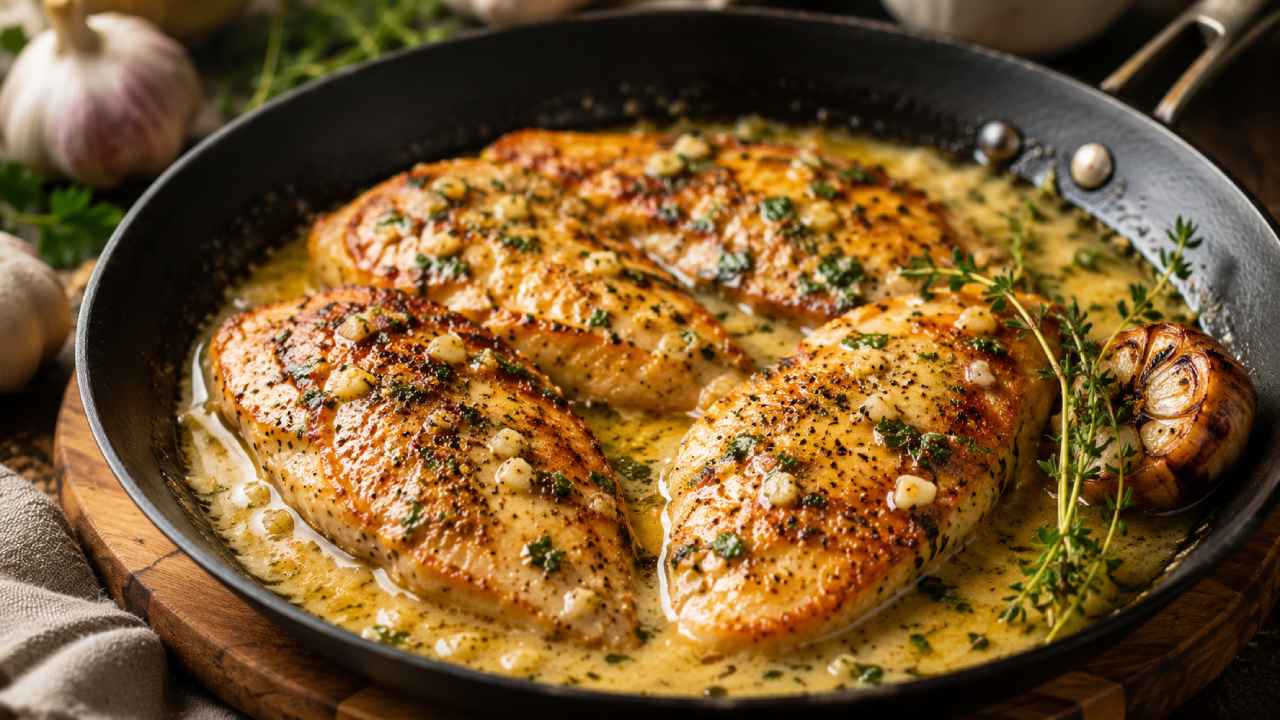
Garlic Butter Chicken with Rich Flavor and Simple Ingredients
LoveFoodReadyMeals – Garlic Butter Chicken is the kind of dish that proves simple ingredients can still create impressive results. It combines juicy chicken, fragrant garlic, melted butter, and fresh herbs in one comforting meal. More importantly, the recipe does not require advanced cooking skills or expensive equipment. With careful seasoning and the right cooking time, home cooks can serve a dish that feels rich, warm, and restaurant-worthy. This recipe is also flexible, so it works well for weeknight dinners, family gatherings, or meal preparation.
Read Also: Chicken Roulade Recipes That Bring Restaurant Quality to Your Home
Why Garlic Butter Chicken Remains a Favorite
Garlic Butter Chicken stays popular because it delivers bold flavor without a complicated process. The butter creates a smooth and savory base, while garlic adds a deep aroma. At the same time, herbs and lemon help balance the richness. As a result, the dish tastes satisfying without feeling too heavy. In my experience, the best recipes often depend on timing rather than long ingredient lists. Garlic should become fragrant, but it should not burn. Chicken should develop a golden crust, but the center must remain tender. Therefore, heat control becomes more important than adding extra seasonings. This balance gives the meal its signature character and makes it reliable for both beginners and experienced cooks.
Simple Ingredients You Need
The ingredient list is practical and easy to find. However, fresh garlic and good-quality butter can make a noticeable difference in the final result.
● 4 boneless and skinless chicken breasts
● 4 tablespoons unsalted butter
● 5 cloves garlic, finely minced
● 1 tablespoon olive oil
● 1 teaspoon paprika
● 1 teaspoon dried thyme
● ½ teaspoon onion powder
● ¾ teaspoon salt
● ½ teaspoon black pepper
● ½ cup chicken stock
● 1 tablespoon fresh lemon juice
● 2 tablespoons chopped parsley
● Optional red pepper flakes
● Optional grated Parmesan
Choose chicken breasts with a similar thickness because they will cook more evenly. In addition, use unsalted butter when possible. This choice gives you better control over the seasoning. Fresh lemon juice also works better than bottled juice because it provides a cleaner and brighter flavor.
How to Prepare the Chicken Correctly
Proper preparation helps the chicken cook evenly and absorb the seasoning. Thick chicken breasts may cook slowly in the center, while thinner parts can dry out. Therefore, flattening the meat slightly is a useful first step.
- Place the chicken breasts on a clean cutting board.
- Cover them with baking paper or plastic wrap.
- Pound the thickest sections gently until the pieces look even.
- Pat the chicken dry with paper towels.
- Season both sides with salt, pepper, paprika, thyme, and onion powder.
- Let the chicken rest for ten minutes before cooking.
Drying the chicken is important because moisture prevents browning. Meanwhile, resting the seasoned meat allows the flavors to settle on the surface. Do not leave the raw chicken at room temperature for too long. Ten to fifteen minutes is usually enough for this recipe.
Cooking the Chicken Until Golden
A good golden crust adds flavor and improves the appearance of Garlic Butter Chicken. The pan should be hot before the chicken goes in, but it should not produce heavy smoke.
- Heat the olive oil in a large skillet over medium heat.
- Add one tablespoon of butter.
- Place the chicken in the skillet without crowding the pan.
- Cook for about five to six minutes on the first side.
- Turn the chicken and cook for another four to five minutes.
- Remove the chicken when the internal temperature is close to 74°C or 165°F.
- Transfer it to a clean plate and cover it loosely.
Avoid moving the chicken too often because constant movement can prevent browning. Instead, let each side cook without interruption. If the pieces are large, cook them in batches. Crowding the skillet lowers the temperature and may cause the chicken to steam.
Making the Rich Garlic Butter Sauce
The sauce comes together quickly, so all ingredients should be ready before you begin. Garlic can turn bitter when overcooked. For that reason, lower the heat once the chicken leaves the pan.
- Reduce the heat to medium-low.
- Add the remaining butter to the same skillet.
- Stir in the minced garlic.
- Cook for thirty to forty seconds until fragrant.
- Pour in the chicken stock.
- Scrape the browned pieces from the bottom of the skillet.
- Add the lemon juice and stir well.
- Simmer the sauce for two to three minutes.
- Add red pepper flakes or Parmesan if desired.
The browned pieces in the pan contain concentrated flavor. Therefore, scraping them into the sauce creates greater depth. However, the sauce should remain light enough to coat the chicken rather than become overly thick. If it reduces too quickly, add a small splash of stock.
Bringing the Chicken and Sauce Together
Once the sauce becomes smooth and fragrant, return the chicken to the skillet. This final stage allows the meat to absorb the buttery flavor.
- Place the cooked chicken back into the sauce.
- Spoon the garlic butter mixture over each piece.
- Simmer gently for two to three minutes.
- Check that the chicken has reached 74°C or 165°F.
- Turn off the heat.
- Add chopped parsley.
- Let the chicken rest in the pan for three minutes.
This resting period helps the sauce cling to the meat. Moreover, the chicken continues to absorb flavor without overcooking. If the sauce feels too rich, add another small squeeze of lemon. That bright acidity can improve the balance immediately.
Tips for Juicy Garlic Butter Chicken
Small cooking habits can prevent dry chicken and burnt garlic. These practical tips also improve the appearance of the dish.
- Use chicken pieces with similar thickness.
- Pat the chicken dry before seasoning.
- Preheat the skillet before adding the meat.
- Avoid cooking over very high heat.
- Do not flip the chicken repeatedly.
- Lower the heat before adding garlic.
- Use a meat thermometer for accurate results.
- Let the chicken rest before slicing.
- Add lemon gradually and taste the sauce.
- Use fresh parsley at the end for a brighter flavor.
A thermometer is one of the most helpful tools for chicken recipes. It removes guesswork and reduces the risk of overcooking. In addition, remember that the chicken will continue cooking slightly after leaving the heat.
Common Mistakes to Avoid
The most common mistake is burning the garlic. Garlic cooks much faster than chicken, so it should enter the pan after the meat is done. Another mistake is using cold chicken directly from the refrigerator. Very cold meat may cook unevenly and release extra moisture. Overcrowding the pan can also affect the result. When too many pieces cook together, steam builds up. Consequently, the chicken may look pale instead of golden. Finally, avoid adding too much salt at the beginning. Butter, stock, and Parmesan can all contribute saltiness. Therefore, taste the sauce before making the final adjustment.
Read Also: Organic Multigrain Bread Packed with Fiber and Natural Goodness
Healthy Ways to Serve This Dish
Garlic Butter Chicken can fit into a balanced meal when served with vegetables and sensible portions. For a lighter plate, pair it with steamed broccoli, roasted asparagus, green beans, or cauliflower rice. A fresh salad with cucumber and tomatoes also works well. For more energy, serve the chicken with brown rice, quinoa, or roasted sweet potatoes. These sides add texture and make the meal more filling. In my opinion, a large portion of vegetables helps balance the richness of the butter sauce. You may also reduce the butter slightly and replace part of it with olive oil. The flavor will remain satisfying, although the sauce will taste lighter.
Flavor Variations Worth Trying
The basic recipe can be adjusted in several ways. For a creamy version, add a small amount of cooking cream after the stock. For an earthy taste, add sliced mushrooms before preparing the garlic sauce. Spinach can also be stirred in during the final minutes. A Mediterranean variation may include sun-dried tomatoes, oregano, and olives. Meanwhile, a spicy version can use chili flakes, cayenne pepper, or smoked paprika. For extra freshness, add basil or dill instead of parsley. However, avoid adding too many strong ingredients at once. Garlic Butter Chicken works best when the buttery garlic flavor remains clear.
How to Store and Reheat Leftovers
Leftovers can stay fresh in an airtight container in the refrigerator for up to three days. Keep the chicken and sauce together because the sauce helps protect the meat from drying out.
- Allow the chicken to cool before storing it.
- Place it in a sealed food container.
- Refrigerate it within two hours of cooking.
- Reheat it gently in a skillet over low heat.
- Add a splash of stock or water if the sauce becomes thick.
- Cover the pan while reheating.
- Stop heating once the chicken is warm throughout.
A microwave also works, but use short intervals and lower power. High heat can make the chicken tough. For the best texture, slice the chicken only after reheating.
Why This Recipe Works for Home Cooks
This Garlic Butter Chicken recipe succeeds because it focuses on simple techniques. The chicken cooks in one pan, the sauce uses everyday ingredients, and the full meal can be ready in about thirty minutes. Therefore, it fits easily into a busy routine. The recipe also creates several layers of flavor. Browning develops a savory crust, garlic adds aroma, butter creates richness, and lemon adds freshness. More importantly, each element has a clear role. Nothing feels unnecessary or overly complicated. That simplicity makes the recipe dependable, flexible, and suitable for repeated cooking.
